


My skeleton knows you are gone,
a hollow where your sternum once pressed against mine,
a phantom ulna reaching
through the dark of the dorm room
for a warmth it cannot hold.
The muscles remember.
Psoas, tight as a fist,
bracing against the empty side of the bed.
Intercostals, caught mid-breath,
as if the air itself has forgotten
how to fill the space you left.
My pulse writes your name
in systole and diastole,
a desperate rhythm the nurses would call
sinus tachycardia of the lonely.
Each beat, a small hammer
tapping the question:
Where? Where? Where?
The vagus nerve wanders,
as its name promises,
searching the quiet library stacks
for the sound of your page-turn,
the familiar frequency of your laugh
caught between study carrels.
I try to find your iris in the eyes of others,
that specific constellation of brown and gold.
My pupils dilate at every dark-haired stranger,
the sympathetic nervous system
confusing hope with threat.
The limbic system has abandoned its duties.
The hippocampus, once sharp
with lecture notes and lab practicals,
now only stores the precise curve
of your jaw and the map of your hand.
The amygdala fires at 3 a.m.
for no reason but the silence
where your breathing used to be.
I am a textbook of absence.
Every chapter annotated
with the ghost of your fingers.
Every diagram labeled
‘here is where she fits.’
The professor calls my name
and I rise like a reflex,
but my mind is still dissecting
the space between us,
a distance no caliper can measure.
Tonight I will study until my eyes ache,
tracing the branches of the brachial plexus,
naming each nerve as if taxonomy
could organize this grief.
But when I close my lids,
the only thing I memorize
is the architecture of your sleeping face,
and how my body—
every cell, every synapse—
still arranges itself
toward you.
- Je Rellora
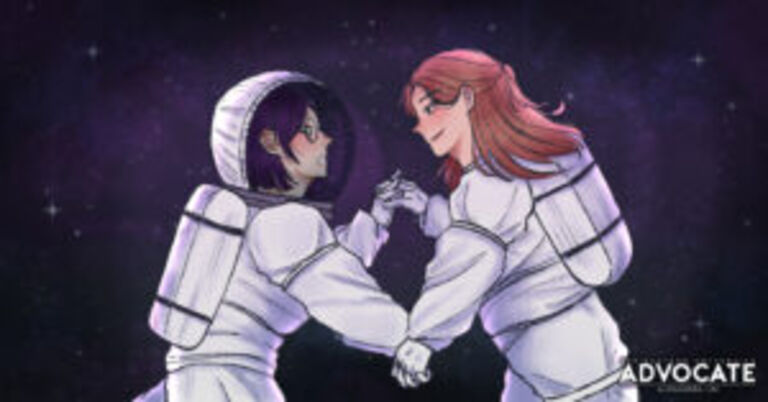
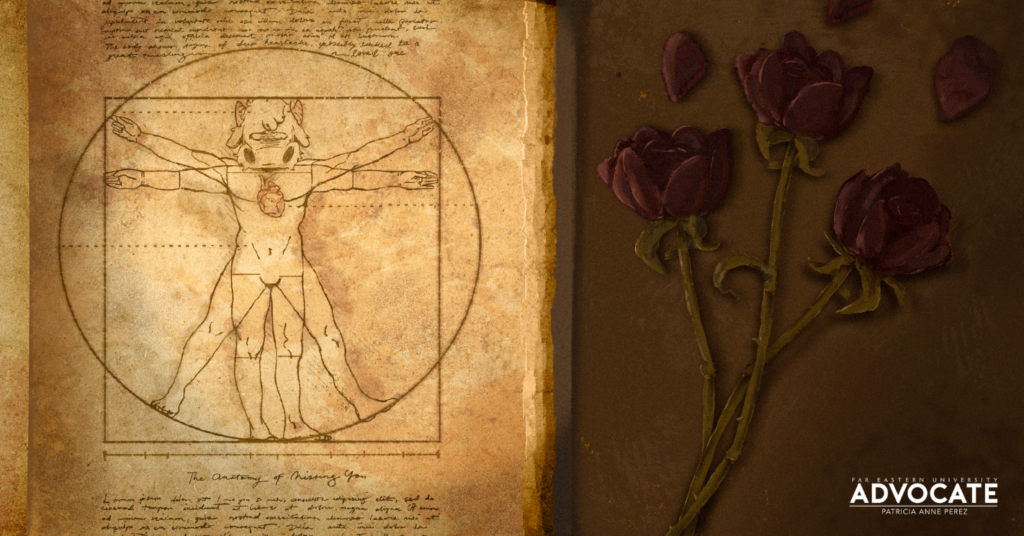
(Illustration by Patricia Anne Perez/FEU Advocate)