




By Misaki F. Koizumi and Sean Clifford M. Malinao
With ‘For Everyone, UAAP’ as the central theme for the University Athletic Association of the Philippines (UAAP) Season 89, Far Eastern University (FEU) sought to make its hosting stint more than just a ceremonial kickoff to another season. For one night, the fun belonged to the green-and-gold community — but long before the lights illuminated the stage, months of preparation had already unfolded behind the curtains.
Hidden from the crowd’s view were the organizers, volunteers, and production team who spent months translating FEU’s vision into a celebration to be seen, heard, and felt. More than delivering a grand opening ceremony, they took on the challenge of turning the event into an experience that was truly inclusive of everyone.
It takes a village to build an oasis
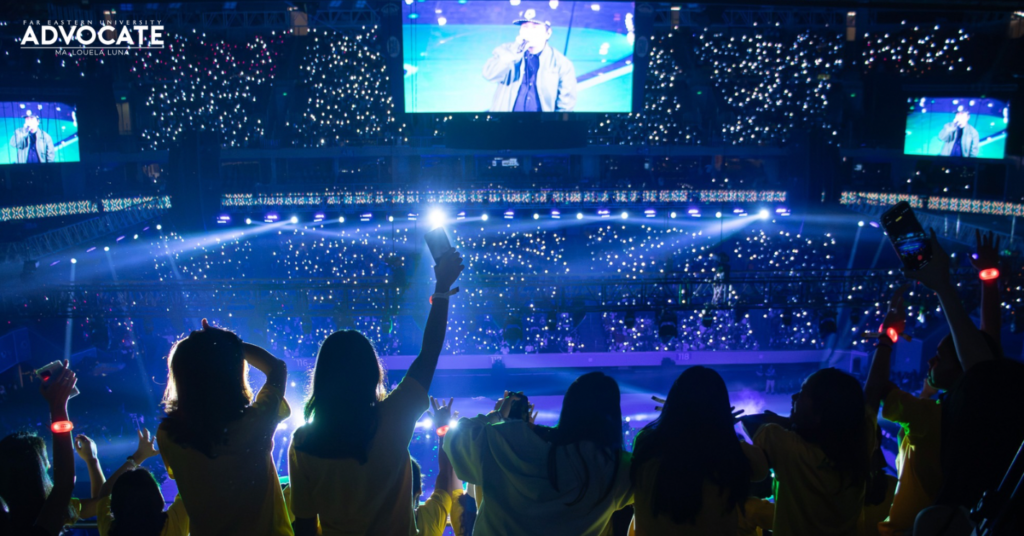
A giant, breathtaking Tamaraw, a stage crowded with lights, and thousands of voices chanting in unison — these are just some of the highlights from the recently concluded UAAP Season 89 Opening Ceremony held at the Mall of Asia Arena in Pasay City last September 12.
The arena transformed into a sea of green-and-gold as FEU welcomed their homegrown athletes, supporters, and fellow UAAP member schools to another awaited chapter of collegiate sports.
Clad in their respective school colors, the delegates marched before the crowd, earning cheers from the whole venue. For many, the parade marked the official beginning of a new season and another opportunity to represent their universities on the collegiate league stage.
Student performers filled the stage and venue with energy, reflecting the spirit of a community gathered under one shared banner.
The evening unfolded as a spectacle of music and movement, with renowned artists and FEU alumni Gloc-9 and Vice Ganda headlining a star-studded ‘Super Unkaboga-Bowl’ show alongside guest performers Darren Espanto, Maki, Kyle Echarri, ‘It’s Showtime’ Baby Dolls, and BINI members Mikha and Maloi.
Yet while many witnessed the celebration from their seats, few saw the grind required to make it happen.
Anchored on the theme ‘For Everyone, UAAP,’ the opening ceremony showcased the University’s vision of an inclusive sporting community. Through music, dance, and visual storytelling, the program highlighted not only FEU’s identity as host, but also the shared traditions that unite the league’s eight member universities.
For the organizers, the challenge was not simply to mount a grand ceremony, but to transform an event into something every athlete, supporter, and member of the UAAP community could genuinely feel a part of.
In an interview with FEU Advocate, FEU communication arts alumnus and now head of communications and press for H&M Philippines Danreb Mejia shared that this year’s theme was envisioned as a message that could be lived and experienced by the very communities that make up the league.
“We wanted the audience to witness radical inclusivity in action,” he said.
As the public relations (PR) head for the UAAP opening, Mejia and his team worked to ensure that the league extended beyond the high-profile sporting events that typically draw public attention months before the grand ceremony.
Through engaging initiatives such as the ‘Spotlight Series,’ the PR team highlighted not only the student-athletes but also the support systems that quietly lift them to success.
Simultaneously, the campaign reached campuses through ambush interviews, inviting students to define what ‘For Everyone, UAAP’ meant from their own perspectives. Rather than speaking for the community, organizers sought to make the league feel welcoming to communities beyond athletes and sports fans.
“We wanted them to feel that this wasn’t just an exclusive club for athletes and UAAP sports fans, but a cultural space where everyone, from the working class campus staff to the queer community and the [Generation] Z youth, has a seat at the table,” Mejia added.
While the audience would later witness a seamless production unfolding beneath the arena lights, Mejia and his team took on countless challenges and faced several uncertainties on the path toward opening night with hurdles that rarely made public.
One memory that remained with Mejia was the discussion that took place as persistent inclement weather disrupted several planned activities in the weeks leading up to the event. They found themselves constantly revisiting plans and exploring alternatives, all while preserving the spirit of the campaign they had worked so hard to build.
“Watching our teams adapt in real time to protect the integrity of the event and the theme without losing our creative momentum is something I will never forget,” he reflected.
It is perhaps fitting that a campaign centered on inclusivity was built through collaboration. According to Mejia, bringing the opening ceremony to life required a village striving toward a shared vision.
More importantly, the PR head credited the trust placed by the University and league leaders in their team, empowering creatives and organizers to pursue ideas that initially seemed ambitious, if not impossible.
“When leadership genuinely trusts its teams to take bold creative risks, magic happens,” Mejia said.
The oasis may have lasted for only one night, but the team that built it revealed the true heart of inclusivity. It belongs as much to the people in the stands, behind the curtains, and beyond the arena walls. From that evening, FEU reshaped the belief into something tangible, cultivating a space where everyone could see themselves in the story.
What remains after the green-and-gold lights
The team behind UAAP Season 89 was not made up only of those who worked on the opening ceremony. Among those behind the curtains were generations of Tamaraws whose own stories were shaped by the University — and who continue to find their way back to it.
For those who once walked in Thy Happy Halls, seeing their alma mater take center stage for this year’s UAAP ceremony carried a meaning that went beyond the evening’s performances. The opening ceremony became a meeting point between the FEU they remembered and the community it continues to become.
Having once covered the league from the pages of the University’s student publication, FEU communication arts alumna and now events director Jean Louise Lapus reflected on how the UAAP had long been intertwined with her own FEU experience — not only as a supporter, but as someone who once told its stories.
During her graduating year in 2002, when FEU hosted UAAP Season 64, Lapus hopped from one university to another to interview athletes for feature stories, ultimately becoming a defining experience of her college life.
Years later, Lapus found herself witnessing FEU take on the hosting mantle once more, this time from a different vantage point.
“Season 89 is a completely different landscape. There’s a generational gap, technology has evolved, and audiences have changed with it,” the alumna shared in a separate interview.
Her experience reflects how the league can become a thread connecting different generations of Tamaraws. Faces may change, tools may evolve, and the way the community gathers may seem different, but the village continues to grow, grounded in the same sense of belonging that has always tied those who have carried the Tamaraw spirit through the years.
This special connection is also evident in the people who returned to contribute to the celebration. For Lapus, being physically hands-on with the project brought her back to the University in a tangible way, yet she noted that her relation to FEU never truly left in the first place.
Her college friends, whom she remains close with, served as another reminder of the community she found during her student years.
Beyond individual memories, the alumna’s return reflected a larger continuity within the University. Those who once experienced FEU as students now witness themselves carrying and contributing to the Institution’s story in different ways.
“Tradition isn’t just about remembering what FEU stands for. It’s about carrying it forward,” Lapus emphasized.
From students who once watched the UAAP to alumni who now help build its legacy, the Tamaraw community continues to grow from one generation to another. The opening ceremony’s oasis may have been built for a single night, but the people who filled it — and those who continue to carry its story forward — are who allow it to live even after the arena lights give their final flicker.
A hundred years in the making
The stories of the Tamaraw community may begin at different points in time and places, but they continue to meet within the walls of the University.
From the alumni who carry FEU with them long after graduation to the current students, athletes, faculty, staff, and supporters who shape its present, the community remains part of what keeps the Institution connected to its roots.
This sense of belonging now stretches toward another milestone.
In 2028, Far Eastern University will mark its centennial anniversary under the theme ‘Continuity and Progress.’ More than a marker of the 100 years FEU has stood, the milestone looks back on what the green-and-gold community has built and continues to build together.
The emblem itself reflects the University’s collective spirit — its design draws from FEU’s heritage while incorporating symbols of an ongoing journey, placing the University’s century-long story alongside the road that still lies ahead.
In this sense, the centennial is not simply a celebration of numbers. It is a commemoration of the people who have given those years meaning — the Tamaraws who have made Thy Happy Halls part of their story, in ways both seen and unseen.
Because beyond its buildings, traditions, and years, the University lives in the people who gather within it, leave their mark, and find their way back. Even outside the UAAP arena, where generations of Tamaraws have stood together for the green-and-gold, this sense of belonging carries on.
As FEU approaches its hundredth year, its rich and brave community continues to gather for the things they love — sports, arts, and their very own people who were shaped by the green-and-gold while still making room for everyone and everything they can still become.
ERRATUM: Danreb Mejia is currenty the Chief Executive Officer of IMPACT, the marketing agency that handled the UAAP Season 89 Opening Ceremony. His former role was Head of Communications and Press at H&M Philippines.
(Photo by Ma. Louela Luna/FEU Advocate)