




By Misaki F. Koizumi, Jenselle A. Muñoz, and Rhyse Cheyann Tancio
Between crowded commutes and the daunting rhythm of college life, it is easy to forget that learning can happen beyond the four walls of a classroom. Sometimes, it takes wandering through a gallery, standing before a century-old artifact, or finding yourself in an artwork to discover something new. For Tamaraws looking for a change of scenery, museums offer more than a glimpse into the past — they can open doors to stories, perspectives, and experiences that textbooks alone cannot capture.
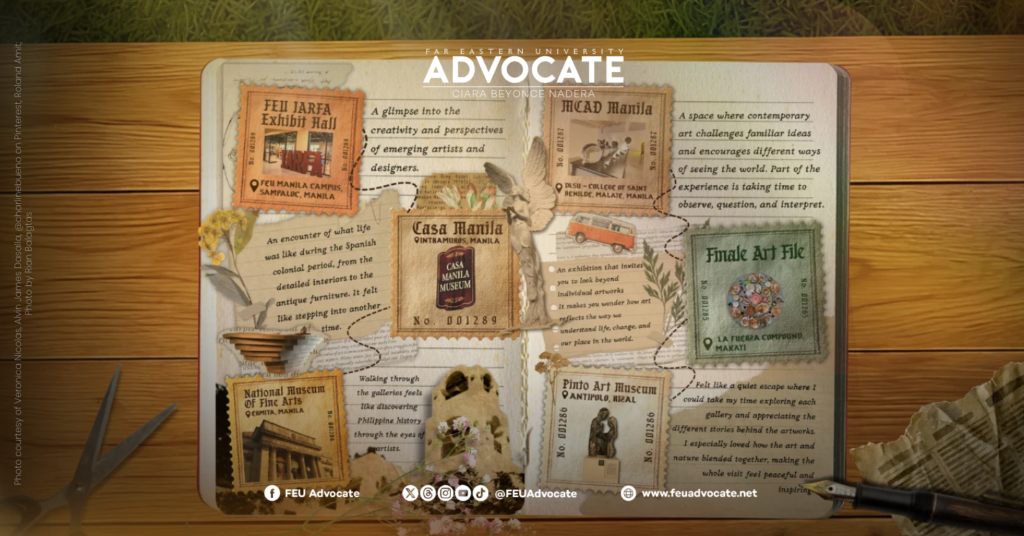
This Museum and Galleries Month, Tamaraws are urged to look beyond Far Eastern University’s (FEU) campus walls, where museums and galleries offer encounters with art, history, and stories of heritage. Within reach of Thy Happy Halls, these spaces invite students to explore works and narratives spanning different periods, communities, and forms.
1. A space for stories beyond the canvas
Just inside its premises, FEU offers spaces where art brings personal experiences and untold stories into view, inviting Tamaraws to pause and reflect beyond their academic routines. Through the Institute of Architecture and Fine Arts Exhibit Hall located at the ground floor of the Architecture and Fine Arts Building, the University provides artists with a platform to share their work, where the green-and-gold community can engage with art beyond the confines of their classrooms.
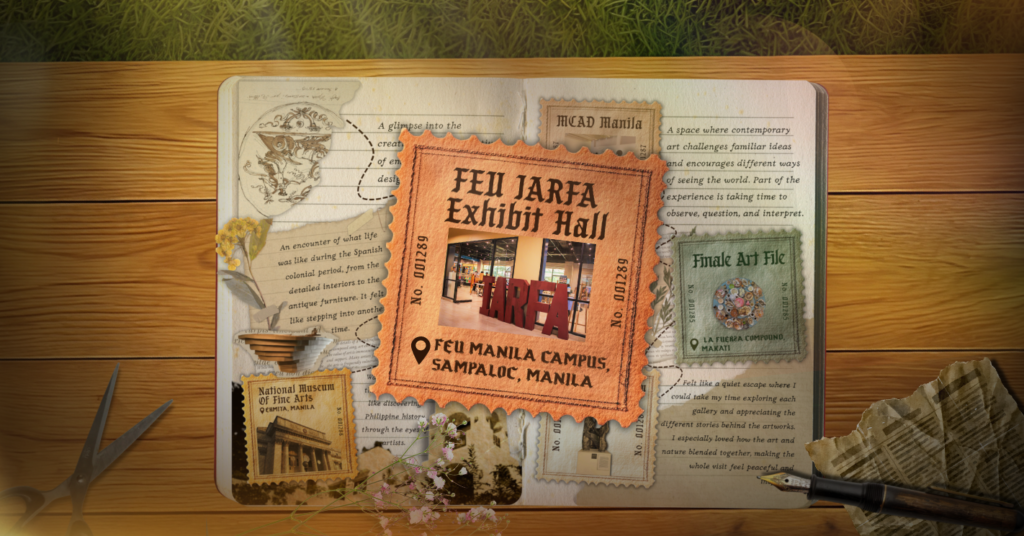
One of such exhibits was ‘Of Angels & Julia,’ a month-long exhibition held at the hall from October 7 to 24 in celebration of Mental Health Awareness Month. It featured the paintings of artist and mental health advocate Shamaine Buencamino, alongside the poems, drawings, and other creative works left behind by her daughter, Julia Buencamino, whose life and memory inspired Shamaine’s continuing mental health advocacy. Through its works, the exhibit explored grief, remembrance, and the possibility of finding connection through art, while encouraging visitors to acknowledge difficult emotions and seek support when needed.
In an interview with FEU Advocate, FEU medical technology freshman Veronica Nicolas shared that among the pieces on display, she found personal meaning in works that celebrate small victories and confront the insecurities that often shape how people see themselves.
“The [origami tree] teaches us to celebrate small wins, while ‘I'm Not Pretty’ encourages self-acceptance, both messages remain relevant because students face academic pressure, family expectations, and insecurities,” she explained
For Nicolas, the origami tree artwork offered a reminder that even the smallest achievements deserve recognition. Amid academic pressure and family expectations, she admitted that she often overlooks her own progress in pursuit of greater accomplishments. Seeing how the piece celebrated small victories encouraged her to reconsider what success means.
“It shows us that art is more than just something beautiful, it’s more of expressing emotions and experiences we can relate to. The origami tree also reminds us to celebrate even our smallest achievements,” she shared.
While the origami encouraged her to appreciate her progress, Ian Victoriano’s ‘I'm Not Pretty’ struck a more personal chord. It also deepened her appreciation for how art can bring insecurities and struggles with self-acceptance into view, allowing visitors to recognize emotions and experiences that often go unspoken.
The two works became memorable for Nicolas because their messages extended beyond the gallery walls and into her own experiences. Rather than simply admiring the pieces, she found herself reflecting on the emotions and experiences that made them meaningful to her.
Through Of Angels & Julia, students were able to realize unspoken feelings through art highlighting the importance of emotional well-being beyond academics. For the freshman, the artworks offer a reminder that neither grades nor appearances define one’s worth.
“A visit becomes memorable when the art connects with our experiences. These exhibits reminded me to appreciate my achievements, acknowledge my insecurities, and be kinder to myself,” Nicolas emphasized.
2. A stroll into the past
It is hard to imagine what life in Manila was like more than a century ago — a different time shaped by different customs, surroundings, and ways of living. Yet within the walls of Casa Manila, traces of that past remain preserved.

Located in Intramuros, Manila, the museum recreates the lifestyle of an affluent Filipino family during the late Spanish colonial period, with its façade patterned after a house that once stood along Jaboneros Street in Binondo in the 1850s. Its interiors also reflect the tastes of late 19th-century Manila through European and Chinese furniture, painted walls, crystal chandeliers, Chinese ceramics, and gilded furnishings.
Surrounded by the historic streets of Intramuros, Miyuki Nagasawa, a fourth-year management accounting student from Lyceum of the Philippines University, has grown accustomed to living alongside reminders of the past. Yet museums such as Casa Manila offer her a different way to encounter history, allowing students like her to engage with preserved spaces and objects that may not otherwise be part of their everyday lives.
“I love how close we are with history. Everywhere we look, we see a part of history that is not talked about as often as we want,” she shared in a separate interview.
From the accounting senior’s perspective, this makes museums particularly meaningful for the youth who are often preoccupied with preparing for their futures and may have little time to understand the past. A simple visit becomes a brief pause from the rush of college life, allowing them to step into another era and perceive how people once lived.
“Thanks to museums, we have the opportunity to, even for a few hours, go back to [the] past and [ensure that] history will never ever repeat itself,” she emphasized.
At Casa Manila, visitors are immersed in the past way of life, which, while far from the present, remains familiar in its quiet continuities. The museum’s details make the past almost tangible, turning what might initially seem like an ordinary collection of old objects into a space that felt as though it had truly preserved a moment in time.
“The items may evolve, but the purpose has been the same — to make our lives easier,” Nagasawa reflected.
Beyond appreciating old objects, museums like Casa Manila also serve as reminders of the choices, events, and mistakes that shaped the present. By looking back, guests are given the opportunity to understand the lives that came before them and consider what lessons they can carry forward.
“The museum, Casa Manila, wants us to know that the past should not be forgotten. It might be a whole different room than what we are used to, the stuff might not be the same as [to] what we are using now, but the whole idea is to never forget the past that gave us the present,” she stated.
3. Recounting history beyond the pages of a textbook
For students whose days revolve around lectures and academic deadlines, stepping into a museum offers a different kind of learning. At the National Museum of Fine Arts situated in Ermita, Manila, history is not confined to textbook pages or memorized dates. Instead, it unfolds through artworks that capture the experiences, struggles, and aspirations of the Filipino people.
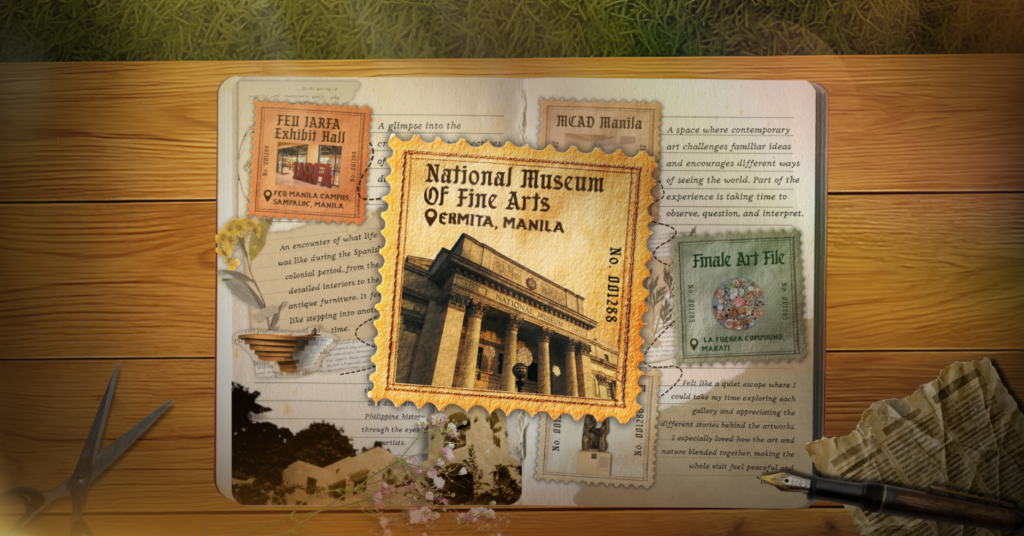
As recounted by first-year FEU medical technology student Alvin James Dasalla, the museum offered him an opportunity to understand the Philippines’ history through a perspective that his science-focused program rarely provides. Beyond presenting historical accounts, its galleries reveal how art can preserve a nation’s cultural and social evolution.
“They refuse to sugarcoat reality. They capture the raw, unfiltered chaos of our history and the ongoing struggles within our society,” he shared in a separate interview.
While Juan Luna’s ‘Spoliarium’ remains one of the museum’s most recognizable masterpieces, Dasalla found himself drawn to its galleries featuring works of social realism and contemporary installations. Aside from artistic executions, the artist’s willingness to confront realities, which are often uncomfortable to acknowledge for the public, made him admire the artworks.
Particularly, the pieces depicting Martial Law and civil unrest left the deepest impression on him, stirring empathy for those who endured the country’s turbulent past. Standing before these canvases, history felt less like a distant memory and more like a wound of which echoes remain, reminding him that the freedoms enjoyed today were hard-won and must never be taken for granted.
“As someone who navigates the busy, modern streets of Manila every day to get to class, looking at those canvases made me reflect on how the streets we walk on today were built over layers of collective struggle and resistance,” Dasalla reflected.
His museum experience allowed him to connect to the struggles represented in the galleries and to the familiar streets he traverses as a student, making the distance between past and present feel smaller. The artworks prompted him to consider not only the suffering that shaped the country, but also the responsibility of the generations who are yet to inherit its history.
“A museum visit that you simply enjoy is purely [an] aesthetic wherein you look at the colors, take a few photos, and move on. A lasting visit is one that fundamentally challenges your worldview,” the student emphasized.
Moreover, Dasalla underscored museums’ role in an age of quick information consumption where public issues can easily disappear beneath the next trending headline. Unlike fleeting posts displayed on-screen, artworks occupy a physical space that encourages visitors to pause, observe, and reflect on the people and circumstances they represent.
“If they could speak, they would tell us not to be passive observers of our own generation… Their messages are not echoes of the past, but blueprints for our present,” he remarked.
4. Confronting the uncomfortable through art
Just a few minutes away from FEU, the Museum of Contemporary Art and Design (MCAD) located at De La Salle–College of Saint Benilde’s School of Design and Arts in Malate, Manila, offers a space where creative expression becomes an experience that challenges perception. Shifting lights, moving shadows, and thought-provoking works invite visitors to confront uncomfortable ideas and reconsider how art can push boundaries and shape society.

This intersection of art and social discourse resonates with FEU medical technology sophomore Seth Asher Medino, who sees MCAD as a place where ideas extend beyond the canvas. Through contemporary art, new media, and interdisciplinary works, the museum invites visitors to engage with perspectives often left unexplored. More than a space for artistic expression, it sparks conversations on pressing social issues.
“For me, museum visits shift the viewer’s experience from ‘passive observation’ to ‘active and memorable interaction’ with the artworks presented, as they invoke internal dialogue while challenging the viewers’ perspectives… MCAD presents an exhibit that urges the public to create commentaries and insights about recent issues, immersing viewers in the experience rather than having them simply look,” he shared in an interview.
While playful lighting throughout the expansive exhibit shapes the museum goers’ experience, one particular work that left Medino with a different impression was ‘The glacier melt series 1999/2019’ by Olafur Eliasson. Through an unsettling portrayal of environmental change, the collective art display evoked an anxiety that lingered long after his encounter with each piece.
“It became memorable for me since it really has something more than meets the eye. Through further examination and observation of each picture, I noticed how it perfectly displays the major impacts of global warming on the snow densities of those mountains from 1999 to 2019… For me, this artwork can and will be a strong call to action and a visual presentation of how serious and relevant such issues can be,” he reflected.
For Medino, MCAD serves as a platform for shedding light to the inequalities and social ills that persist in society, encouraging visitors to look beyond the frames and reflect on the realities they portray.
“Institutions like MCAD provide the crucial civic space that cultivates deep, relevant interpretations of social issues in today’s era… Contemporary art museums serve both as a mirror and a megaphone: they provide the lens to view inequalities, political narratives, and a voice for the marginalized people. When art becomes a tool for advocacy and awareness, beautiful works transform into active agents of social change,” he emphasized.
Underlining the museum as a catalyst for change, Medino sees its featured artworks as reminders of society’s unresolved issues. Aside from reflecting present realities, MCAD challenges younger generations to confront such issues and recognize their power to shape the future.
“‘Never stop challenging social systems, learn to confront uncomfortable truths, and remember that you have the power to change things.’ These messages are more relevant than ever, especially for younger generations, as we are currently being bombarded with both real and fake news online, we see and experience the effects of social inequalities, and we worry about the future we are going to inherit,” the sophomore urged.
5. When art puts real issues on the table
At first glance, everyday life can seem like a mosaic of stories of people pursuing their ambitions, fulfilling their duties, holding on to their beliefs, and playing roles shaped by the systems they belong to. Yet beneath these seemingly ordinary routines are forces that influence how people see themselves and one another.
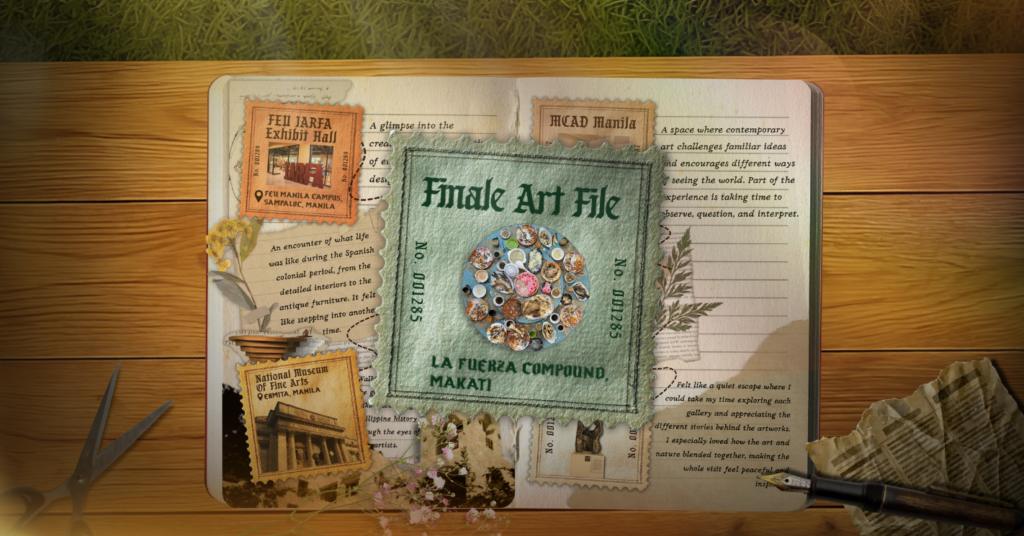
Occupying the gallery space of Finale Art File in Makati City until October 31, the art exhibition ‘The Grand Scheme of Things’ explores tensions through a series of sculptures and works that examine commanding, devoted, and driven impulses. Drawing on familiar Filipino imagery and using humor, irony, and strikingly realistic figures, the exhibition turns everyday roles into reflections of the broader political, economic, religious, and social structures that surround them.
As she moved from one piece to another, Franchezcka Denise Busque, a second-year business administration student from the City University of Pasay, was prompted to reflect on the social issues woven into the works.
“Through art, mas nakikita natin ‘yung mga issues tulad ng corruption, poverty, at inequality (Through art, we grasp issues such as corruption, poverty, and inequality),” she noted in an interview.
One of the works that caught her attention was Filipino artist Lindslee’s ‘The Round Table,’ which featured hyperrealistic food sculptures arranged around a circular table. Despite its strikingly lifelike details, the food’s scattered and messy arrangement, reminiscent of leftovers after a meal, draws attention to its underlying themes. Beyond its visual appeal, understanding the symbolism beneath the objects — particularly the connection between food and themes of abundance and deprivation — gave the piece a deeper meaning.
“It made me think about how some people have more than enough while others struggle to meet their basic needs. Nakakatuwang makita kung paano nagagamit ng [artists] ang ordinaryong bagay para magpahayag ng mas malalim na mensahe (It’s fascinating to see how artists use ordinary objects to express deeper meanings),” the business administration student reflected.
Busque’s realization became even more striking when she encountered ‘Trust,’ a sculpture of a politician sitting on sacks of rice made by the same artist. Rather than simply admiring its construction, she found herself confronted by the message behind it.
“Nakakaramdam ako ng frustration kapag naiisip ko ‘yung corruption at greed na patuloy na nakaaapekto sa bansa natin. Napaisip din ako kung paano naaapektuhan ng mga desisyon ng mga taong nasa posisyon ang buhay ng ordinaryong Pilipino (I feel a sense of frustration whenever I think about how corruption and greed continuously affect our country. I also think about how the decisions of people in positions of power affect the lives of ordinary Filipinos),” she recalled.
Busque realized that the artwork that frustrated her was what made the experience memorable — a feeling that revealed how the issues represented in the gallery were not detached political concepts or headlines to scroll past, but problems that directly affected the lives of ordinary Filipinos.
“Para sa akin, ‘yung museum visit na talagang tumatatak sa memory mo ay ‘yung may natutunan ka at may experience kang maaalala kahit matagal na ang lumipas. This gallery gave me that kind of experience kasi hindi lang ako basta tumingin sa mga artworks; napaisip din ako sa mga messages behind them and how they relate to real life (For me, a museum visit that truly stays in your memory is one where you learn something and have an experience you can remember even after a long time. This gallery gave me that kind of experience because I did not simply look at the artworks; I also thought about the messages behind them and how they relate to real life),” she recalled.
6. Culture and history, painted anew
Brick by brick, the Pintô Art Museum has become more than a space for artistic expression. For Tamaraw art enthusiasts seeking to deepen their appreciation beyond the City of Manila, the museum’s galleries in Antipolo, Rizal, offer a space where creativity intertwines with culture, history, and raw human experiences.
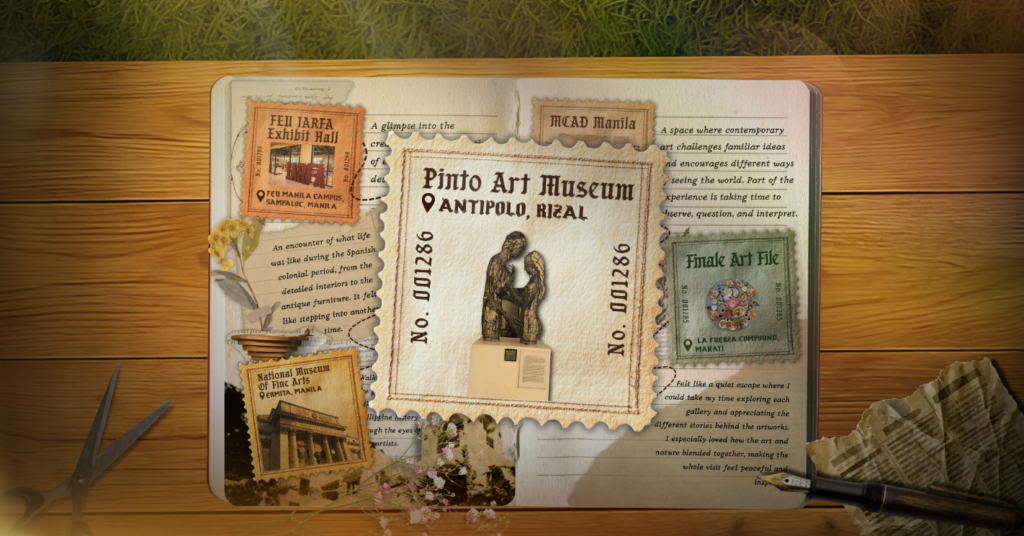
Despite being farther from the metro, Pintô Art remains accessible through public transportation, inviting visitors to explore the stories and advocacies behind its artworks. For second-year FEU medical technology student Maria Nathalia Allison Vasquez, each visit offers an opportunity to engage with these narratives and the realities they reflect.
“A lot of the artworks displayed there depict social realism and a lot of them have creatively shown or expressed different kinds of Filipino struggles in a single canvas or sculpture. One of the interesting things I've learned there is that a lot of the artworks there emerged after the fall of the Marcos regime that inspired an era of creative expression,” she shared in a separate interview.
Having visited the museum three times, Vasquez continues to return to one particular artwork that left a lasting impression on her. Through its realistic portrayal of familiar scenes and emotions, ‘Taking the Road Less Travelled’ by Jay Viriña marked one of her most memorable encounters with contemporary art.
“I wasn’t a fan of contemporary art, but I really noticed that particular artwork because it reminded me of when my family used to go on these road trips, and my siblings and I would fall asleep on our way home. I’d wake up for a minute to look outside the window and the painting reminded me of that view, of that memory… That painting speaks to me on a more personal level,” she reminisced.
With every visit, Vasquez discovers something new about the museum and its stories. Beyond housing a collection of artworks, Pintô Art Museum becomes, in her eyes, a reflection of the culture and experiences shared by the Filipino people.
“The way Pintô Art takes you back to its history from the way they curated their art to the architecture of the place itself is historic in its own way… I’ve never seen contemporary art by Filipino artists, but after going to Pintô Art and seeing a lot of artworks done by our local artists that represented a lot of Filipino culture made me appreciate this art movement,” she noted.
Vasquez also expressed a deep appreciation for the artworks themselves and the stories they carry. Beyond acknowledging their artistic value, she hopes art will continue to serve as a medium for meaningful discourse, encouraging people to reflect on shared experiences and work towards change.
“Since a lot of artworks displayed there depict a lot of Filipino struggles that we are still experiencing today, especially corruption, the message of those artworks still remains relevant today. Aside from art being a medium for self-expression, it also serves as a reminder of the past and if we are still experiencing those struggles today, maybe we should look at our ways and see what we can do to change things for the better,” she encouraged.
Beyond the canvases and curated exhibits, art museums and galleries hold stories that deserve to be heard and causes that call for our attention. They offer more than a glimpse of artistic expression, further shedding light on peoples’ shared struggles by giving local artists a platform to bring these perspectives forward. Through these spaces, art becomes a means of understanding the realities that shape society and recognizing the advocacies worth standing for.
To appreciate art, then, is not only to admire its beauty but also to support the voices it amplifies and the local artistry that deserves to be championed.
As museums continue to open their doors to new perspectives and stories, may we also open our eyes to the world that art brings into view. Let every visit become an opportunity to look beyond the surface, question the realities around us, and discover the stories that connect us to our history and to one another. After all, museums do not simply house works of art; they provide spaces for reflection, and it is up to us to carry their stories beyond their walls.
(Photo courtesy of Veronica Nicolas, Alvin James Dasalla, @charlinebueno on Pinterest, Roland Amit; Photo by Rian Balagtas; Layout by Ciara Beyonce Nadera)