The devotion that drives Traslacion 2026
- January 13, 2026 18:47
FEU Advocate
January 25, 2026 17:13
By Jiann Delumen
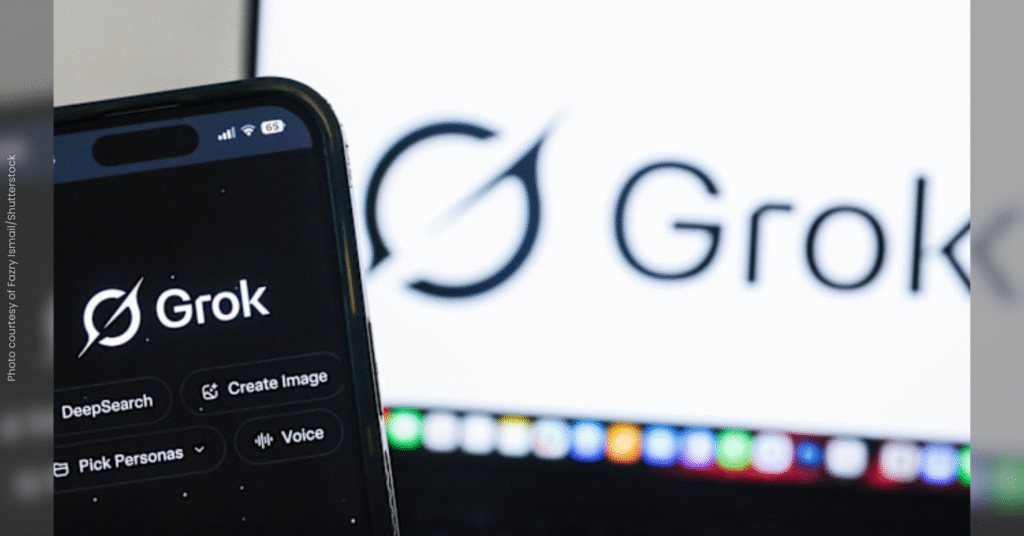
After less than a week of restricted access, the Philippine government lifted the ban on Grok, a generative artificial intelligence (AI) chatbot that was blocked following reports linking the platform to AI-generated sexual content involving minors, prompting regulators to invoke existing child protection and cybercrime laws.
Grok, developed by xAI and integrated into the social media platform X (formerly Twitter), allows users to generate text and images through descriptive prompts—a capability that has drawn regulatory scrutiny as image-generation tools become more widely accessible.
Authorities order temporary blocking of Grok
Intended to immediately limit access to content that could violate Philippine law while assessments were ongoing, the Department of Information and Communications Technology (DICT) ordered the blocking of Grok on January 16 after reports surfaced that the platform had been used to generate manipulated and sexualized images.
DICT Secretary Henry Aguda explained that the authorities could not delay intervention once concerns involving child protection were raised, citing potential violations of multiple laws governing online sexual exploitation.
“Maraming batas ang nalabag. ‘Yung AI [Grok], nagagamit nila for child pornography. Hindi na kami puwedeng magpatumpik-tumpik diyan. Dapat i-block na namin kaagad (Several laws were violated. AI was being used for child pornography. We could not afford to delay any further, so it had to be blocked immediately),” Aguda said.
The National Telecommunications Commission subsequently directed internet service providers to block access to the platform nationwide, while the Cybercrime Investigation and Coordinating Center (CICC) shared that the restriction was imposed as a temporary preventive measure during ongoing legal and technical reviews.
Safeguards prompt lifting of Grok restriction
Days after the restriction took effect, the DICT said they began reviewing whether the ban could be lifted following changes introduced by Grok’s developer.
In a January 19 update, the department noted that xAI had taken corrective measures to address the misuse that prompted the ban and remained in communication with the platform to assess whether safeguards were sufficient to prevent similar incidents involving AI-generated imagery.
As part of the corrective steps cited by regulators, xAI disclosed enacting technical controls that restrict image-editing functions to prevent illegal depictions of real people in revealing clothing.
“We have implemented technological measures to prevent the Grok account on X globally from allowing the editing of images of real people in revealing clothing such as bikinis,” xAI disclosed in a statement posted on X.
The company also said it would apply location-based restrictions to block AI-generated content that violates local laws, limiting certain image-generation features depending on country-specific regulations.
On January 21, the CICC confirmed that the restriction on Grok had been lifted after xAI committed to tightening content controls and removing features that allowed the generation of sexually explicit and manipulated images.
Despite removing restrictions, the CICC reiterated that strict oversight of the platform would continue.
Legal basis cited by regulators
Aguda declared that the regulators anchored the blocking order on Republic Act No. 9775, or the Anti-Child Pornography Act of 2009, which criminalizes the production, distribution, and possession of child sexual abuse material in any form.
In another statement, the CICC also cited Republic Act No. 10175, or the Cybercrime Prevention Act of 2012, which penalizes computer-facilitated offenses such as cybersex and the online distribution of sexually explicit material, particularly when minors are involved.
The Philippines currently has no comprehensive laws regulating AI, prompting regulators to rely on existing child protection and cybercrime statutes when addressing AI-related misuse.
In response, similar concerns have been raised in the Senate, with Senator Bam Aquino announcing plans to file legislation targeting the deceptive or exploitative use of deepfakes that involve the unauthorized use of another person’s image or likeness.
Within Congress, women’s rights group Gabriela has filed House Bill 4779 seeking to include deepfakes and other forms of technology-assisted abuse under the Anti-Violence Against Women and Their Children law.
“Abuse now happens not only in homes and public places, but also in digital spaces powered by algorithms and AI tools that profit from women’s objectification… Hindi lang rin ito usapin ng pag-update ng mga batas, kun’di pagpapatuloy ng efforts para labanan at wakasan ang kultura ng abuso at pagsasamantala sa kababaihan at bata (This is not only a matter of updating laws, but also of continuing efforts to combat and put an end to the culture of abuse and exploitation of women and children),” Gabriela representative Sarah Elago asserted in their statement.
Broader risks linked to generative AI
Beyond the immediate regulatory and legislative responses in the Philippines, reporting has pointed to longer-term patterns in how generative AI tools can be exploited.
Early coverage focused on non-consensual sexual images of adult women produced through image manipulation and editing features, with later accounts showing the same methods being used to generate content involving minors.
Philippine authorities have since cited comparable concerns raised by child protection and law enforcement bodies globally over the production and circulation of such material through generative AI.
A study by the Center for Countering Digital Hate found that Grok alone generated millions of sexualized images within days, including thousands that appeared to depict minors, underscoring how generative AI can enable the rapid production of harmful content at scale.
International organizations such as the United Nations Children’s Fund have warned that generative AI systems carry risks of producing unpredictable or harmful outputs when safeguards are insufficient, highlighting the need for stronger child protection frameworks.
In the United States, the Federal Bureau of Investigation has remarked that child sexual abuse material remains illegal regardless of whether it is created using AI, warning that generative models can be exploited to create sexually explicit images involving minors.
Meanwhile, the Philippines became one of three countries in Southeast Asia to temporarily restrict access to Grok, following similar actions taken by Malaysia and Indonesia amid scrutiny over AI-generated sexual content.
As of writing, the DICT noted that monitoring will continue as agencies assess Grok’s compliance, with regulatory oversight remaining in place following the restoration of access in the Philippines.
(Photo courtesy of Fazry Ismail/Shutterstock)