





By Julienne G. Tan
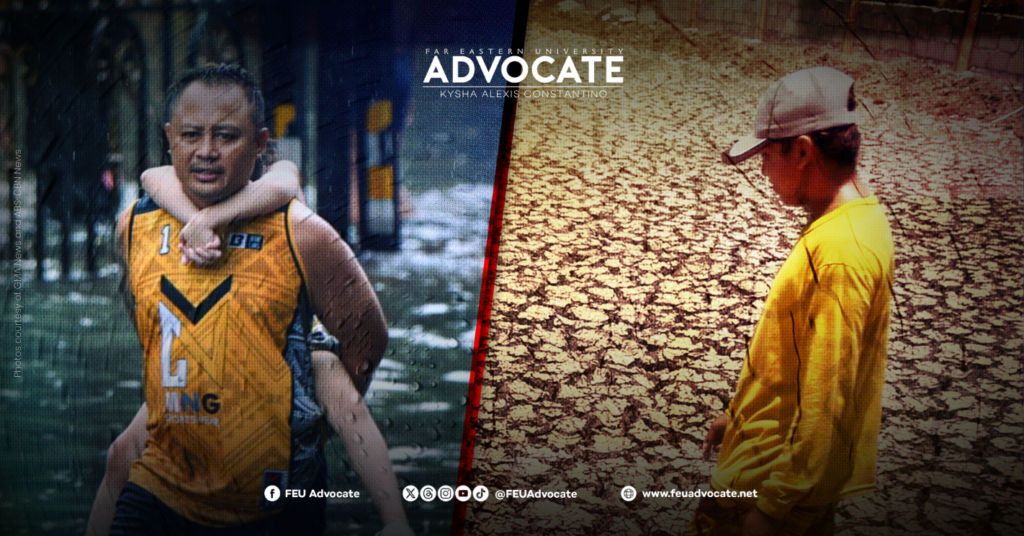
In the latter half of August 2026, Metro Manila and Western Luzon received 305 millimeters of rain in just three days, submerging streets and triggering landslides. Before affected communities could fully recover, another climate threat emerged: months of drought and scorching heat expected from October through May 2027. As the country braces for another climate crisis, the burden once again threatens to fall on those least equipped to bear it.
The Philippines is nearing a ‘Super El Niño,’ an informal term for an exceptionally strong El Niño event characterized by unusually warm sea surface temperatures in the Central and Eastern Equatorial Pacific, reaching at least two degrees Celsius above average.
From overflowing dams to intense drought, the country is confronting both ends of an increasingly punishing cycle. With El Niño expected to persist into 2027, the immediate concern is how its effects will unfold and whether the country is prepared for what comes next.
What follows the floods
The ongoing El Niño is expected to strengthen further by the end of 2026 and persist into the first half of 2027, bringing prolonged dry conditions that could deplete water supplies, damage crops, and expose vulnerable communities to more intense heat. As temperatures rise, rainfall patterns also shift, increasing the likelihood of prolonged dry spells, water shortages, agricultural losses, and extreme heat in vulnerable regions.
While often referred to as a Super El Niño, the phenomenon’s projected intensity carries consequences beyond its classification.
This rainfall deficit could make irrigation more difficult for farmers, putting harvests and food prices at risk. The Department of Agriculture (DA) reported ₱6.87 billion in agricultural damage, affecting more than 223,000 farmers and 249,028 hectares of farmland. The DA also warned that a strong El Niño could cut rice production by up to 700,000 metric tons, about 3.5 percent of the annual target.
Hotter temperatures can increase electricity demand as households, schools, and businesses rely more heavily on fans and air-conditioning.
Energy Secretary Sharon Garin warned that lower water levels could reduce hydroelectric output, while the heat could also make coal plants less efficient and raise the risk of outages, as observed in past El Niño events. Subsequently, biomass and solar facilities may also face disruptions.
For ordinary Filipinos, these risks could mean rationed water, higher utility bills, reduced agricultural income, and more difficult conditions for those who work or study outdoors. Meanwhile, the burden may be particularly severe for families who cannot afford cooling appliances and alternative water sources, and for those who might incur income loss due to work disruptions.
Although the country may experience an overall drier climate, drought does not mean the complete absence of rain. The Philippine Atmospheric, Geophysical and Astronomical Services Administration cautioned that the Southwest Monsoon or Habagat and active tropical cyclones could still bring localized heavy rainfall, particularly to western areas of the Philippines.
The transition from floods to drought may appear sudden, but its consequences will unfold differently across the archipelago. As El Niño intensifies, the outcomes will depend not only on the severity of the weather conditions but also on the safeguards available to those most at risk.
When the climate disrupts a living
As of October 7, the El Niño had affected more than 428,000 people nationwide, according to the National Disaster Risk Reduction and Management Council. These include communities across the regions of Cagayan Valley, CALABARZON, MIMAROPA, Bicol, and Caraga.
As the phenomenon intensifies across the country, its consequences are expected to extend further, with prolonged heat threatening Filipinos in their homes, workplaces, and daily commutes.
Commissioner on Climate Change Albert Dela Cruz warned that temperatures in some parts of the country could reach 45 degrees Celsius or higher, while heat indices may climb to 52 to 55 degrees Celsius between March and May 2027.
The Climate Impact Lab projected 451,000 excess heat-related deaths worldwide from June 2026 to February 2027, including 6,500 in the Philippines, underscoring the stakes of a hotter season.
In Metro Manila, however, escaping the heat is not always easy. Trees and green spaces that provide shade and help cool urban areas remain limited in a city dominated by concrete, asphalt, and densely packed buildings.
Ecological areas such as the La Mesa Watershed, Arroceros Forest Park, and parts of the University of the Philippines Diliman campus offer pockets of greenery, but the majority of the metropolis remains exposed to the sun. Among many residents, relief means seeking refuge in shopping malls or other air-conditioned establishments, options that may not be accessible or practical for everyone.
For working students, these conditions are not just figures in climate projections. They shape how much they can earn, how safely they can travel, and whether they can keep up with school.
In an interview with FEU Advocate, working student Maria Isabel Santos said she had to reduce her working hours at her family’s food business because of the unstable weather’s effects on her health.
“Before, I used to work for 5–6 hours, pero ngayon naging 3–4 hours na lang because [of the long] exposure sa pabago-bagong weather, especially sa direct heat at biglaang ulan… [it] affects my health,” she said.
Beyond the physical toll, the weather also directly impacts Santos’s family food business, where customer turnout and daily income depend partly on the climate conditions.
“Kapag biglang umulan, kumokonti ang customers kaya bumababa rin ang sales namin (When it suddenly rains, we get fewer customers, so our sales also decrease),” she shared.
Santos worries that hotter temperatures and unpredictable rainfall could make it harder to maintain the business’s usual income. To cope with these conditions, she believes practical changes are necessary.
“For our food business, having proper ventilation and a covered workspace would help us continue working comfortably kahit sobrang init or umuulan,” she added.
On the other hand, Prince Alvie Taghoy, a dispatcher who frequently travels between the Navotas piers and Makati, faces a different set of difficulties. Flooding can make his commute dangerous and unpredictable, even when there is no rain in the immediate area.
“One time, siguro two months ago, biglang bumaha nang sobrang taas, pero hindi naman [na umuulan] kaya lumusong ako ng baha para lang makapasok sa trabaho (One time, about two months ago, the flooding suddenly became extremely severe, and it wasn’t raining, so I had to wade through the floodwaters just to get to work),” he recalled.
The weather also forces Taghoy to adjust his schedule, sometimes at the expense of his other responsibilities. To avoid the hottest hours, he moves tasks originally scheduled around midday to later in the afternoon.
But adjusting his own routine can only go so far. As a working student, he also believes that schools should respond more promptly when weather conditions make commuting unsafe.
“Dapat kapag may matinding bagyo automatic [ay] online, hindi ‘yung inaantay pa ‘yung sobrang lakas o ‘di kaya inaantay pang bumaha nang sobra para i-suspend or gawing online modality (When there is a severe typhoon, classes should automatically shift online instead of waiting for the typhoon to become extremely strong or for severe flooding to occur before suspending classes or shifting to an online learning modality),” Taghoy said.
Weather disruptions do not end when the rain stops or the heat subsides. Its effects extend to their workplaces, classrooms, and even household finances, prompting them to adjust to conditions they have little power to control.
Preparing for El Niño, therefore, requires more than advising people to drink water or avoid the sun. Workers need safer workplaces, access to shade and ventilation, and reasonable flexibility when conditions become dangerous. Schools and employers must also consider how extreme weather affects attendance, productivity, and income. Individual precautions matter, but they cannot replace wider measures that make people less vulnerable in the first place.
Preparedness cannot rest on individual resilience alone. With risks already taking shape, the burden now falls on the institutions responsible for public safety to prove that they can turn preparedness into concrete protection before another crisis leaves communities paying the price.
Where do billions go?
With a potentially severe El Niño looming, Malacañang has announced more than ₱46 billion in funding for the country's response this year, urging Filipinos not to panic. The allocation includes a ₱6.2 billion budget for agricultural assistance and ₱39.82 billion for disaster management.
Across the country, local governments and agricultural agencies are also preparing for El Niño. In Candon City, Ilocos Sur, Mayor Eric Singson said nearly 70 percent of the city’s rice lands were already showing signs of drying, putting approximately 5,000 farmers at risk. The city has set aside 100,000 liters of diesel for qualified rice farmers to help sustain irrigation while also preparing water trucks and storage tanks in anticipation of possible shortages.
Meanwhile, the National Irrigation Administration is expanding solar-powered irrigation projects to help farmers maintain production while reducing dependence on diesel-powered pumps. These measures aim to protect agricultural livelihoods as prolonged dry conditions threaten crops and water supplies.
With drought threatening farms, water supplies, and livelihoods, funding must translate into timely assistance for the communities at risk. Authorities must ensure that aid reaches farmers before crop losses deepen and extend support to stakeholders whose income is vulnerable to extreme weather.
But what safeguards are actually in place to ensure these billions reach the people who need them the most?
Beyond financial assistance, preparedness also depends on how institutions respond to the people affected by extreme weather. For Taghoy, this includes schools recognizing how unpredictable conditions can disrupt attendance, deadlines, and the balance between work and academics.
“Para sakin siguro para mas mapadali ay isa na yung deadlines sa school and absences, dapat maging considerate sila dahil nga sa pagbabago bago ng panahon, hindi natin masasabi (For me, to make things easier, schools should be more considerate with deadlines and absences because of the unpredictable changes in weather),” he said.
The government’s response therefore will ultimately be measured not only by the amount allocated but also by whether its interventions reach vulnerable people before conditions worsen.
Preparedness beyond promises
While government action remains essential, communities can also take practical steps to prepare for the effects of El Niño. Households can conserve water and electricity, while families can protect vulnerable members from extreme heat by ensuring hydration and have access to cooler spaces. Supporting local tree-planting efforts and protecting existing green spaces can also help communities cope with rising temperatures.
However, even individual action has its limits. Families cannot conserve their way out of inadequate water infrastructure, and communities cannot plant enough trees to compensate for the loss of green spaces or poorly planned urban development.
Residents shouldn’t bear the burden of preparing for disasters while public funds intended for flood control and disaster risk reduction are delayed, mismanaged, and lost to corruption.
Government agencies and local disaster risk reduction and management councils must ensure that early warnings lead to concrete preparations, evacuation and emergency plans are workable, and infrastructure projects are transparent, properly implemented, and independently scrutinized.
The public deserves to know where disaster funds go, why projects are delayed, and who is responsible when they fail. Those found guilty of corruption must face legal consequences and not just public scrutiny.
Last August, Filipinos watched streets and their homes disappear beneath floodwaters. Now, with a severe El Niño looming, the country faces the opposite threat: dwindling water supplies, damaged crops, and dangerous heat. The shift from floods to drought is a reminder that disaster preparedness cannot begin only when danger becomes impossible to ignore.
Ordinary Filipinos can prepare for what lies ahead, but they cannot be expected to make up for years of unpreparedness. The government must answer for the delays and failures that leave communities vulnerable, especially when projects meant to reduce disaster risks fail to deliver the protection when needed. A disaster may be unforeseen, but the failure to prepare for it should never be treated as inevitable.
(Photo courtesy of GMA News and ABS-CBN News; Layout by Kysha Alexis Constantino/FEU Advocate)