






By Jenselle A. Muñoz
#SciTAM: Age may define the body, but it cannot tell the story of what beats within. As the relationship between the heart and one’s everyday habits becomes a race against time, slowing down on repetitive habits that influences the wellness of the heart may benefit it from bearing the consequences. The heart’s future, then, may be shaped not only by time, but by the habits people form long before old age arrives.
While cardiovascular complications are often attributed with older adults, some risk factors can develop much earlier. Younger generations are no exception, particularly college students who are often habituated to routines that can place their cardiovascular health at risk.
The cost of growing older
As people age, the heart grows with them and undergoes gradual physiological changes. Such issues may arise from varying factors in lifestyle and hereditary conditions. The heart may enlarge, while blood vessels and valves can grow thicker and stiffer. Together, these changes gradually affect the heart’s function to effectively circulate blood to meet the body’s needs.
Aging, after all, is an inevitable part of life; so too are some of the changes that come with it.
Age-related changes can affect how efficient the cardiovascular system responds to physical demands. Their effects vary from person to person, depending on factors such as health conditions and overall cardiovascular health.
These changes may manifest as a faster resting heart rate, elevated blood pressure levels, or shortness of breath during routine activities — signs that may seem minor but can point to underlying cardiovascular strain when persistent.
Occasionally skipped heartbeats can be harmless, but frequent or persistent irregularities may indicate an arrhythmia, a condition involving an abnormal heart rhythm. The gradual thickening of the heart walls may also affect how efficiently the heart fills with blood, while changes in the blood vessels can contribute to fluctuations in blood pressure.
These changes, however, do not exist in isolation. Cardiovascular complications may also be influenced by family history and other factors more than seniority. Thus, a person’s susceptibility to cardiovascular problems may also depend on existing health conditions and lifestyle.
Yet, for all the ways cardiovascular complications are associated with aging, the heart does not always wait for old age before it begins responding to the life it is given.
The assumption that cardiovascular disease only starts later in life fades as younger people are exposed to these risks as well. As students navigate day-to-day academics, they are particularly vulnerable to routines and stressors which may result in prolonged hours of sitting, irregular meals, sleepless nights, and mounting stress that can take a toll on the body. While none of these factors are an immediate precursor of developing a cardiovascular disease, such cumulative effects might contribute to cardiovascular health over time.
The concern is that lasting habits formed in youth can affect the heart long before the consequences become visible. Behind every skipped meal and stressful deadline lies a circumstance that can shape cardiovascular health over time.
In student life, the pressure of deadlines and assessments can trigger the body’s “fight-or-flight” response, which increases the heart rate. Meanwhile, all-nighters spent finishing assignments or preparing for exams may disrupt normal blood pressure levels, increasing the risk of future complications.
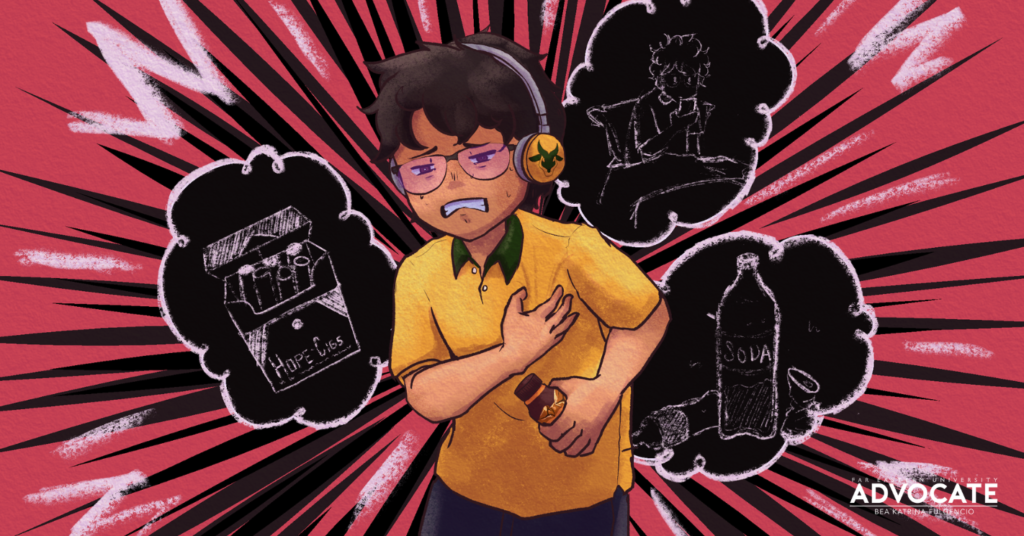
Amid academic demands and packed schedules, some students may find it challenging to maintain healthy routines, often relying on fast food, spending long hours sitting, or turning to vices such as smoking to cope with stress.
This raises health concerns as frequent consumption of sodium-rich foods can contribute to high blood pressure, while diets high in saturated fats and added sugars can increase other cardiovascular risks.
Meanwhile, tobacco exposure damages blood vessels and contributes to atherosclerosis, a condition in which plaque builds up inside the arteries leading to shortage of blood flow, blood clots, or heart failure.
What may begin as small, daily compromises can accumulate and place greater demands on the heart over time. But how do these habits actually affect young people, and what can students do to reduce these risks?
Where the heart lives
Behind the long nights, rushed meals, and prolonged sitting are students experiencing the volume of workloads in academic life alongside their personal responsibilities. Keeping up with the everyday demands can leave little room for habits that promote long-term well-being.
For Krishia Valerie Luceña, second-year Far Eastern University (FEU) medical technology student and Girl Representative of the Girl Scouts of the Philippines – Camarines Sur Council, balancing academics with her responsibilities as a student leader comes with added challenges.
In an online interview with FEU Advocate, Luceña shared that as she navigates a complex life, her academic and extracurricular responsibilities often make regular meals difficult to maintain, compromising her energy throughout the day.
“Whenever I skip a meal by choice or by circumstance, it greatly affects my energy for the whole day…That is why I prefer to have proper meals, as my most productive days are those when I am able to eat and refuel properly,” she explained.
Aside from meals she misses out on, she also noted that sleep quality influences her physical wellness, especially during everyday routines.
“On a rough estimate, I would say that my average sleeping hours are about five to six hours, and it is really reflecting on my daily activities. Having this amount of sleep always tends to make me feel like I am always tired and zoning out, and I try to change it and sleep longer because I believe that it will hugely affect my health, especially the wellness of my cardiovascular system, in the long run,” the medical technology sophomore shared.
Recognizing how these habits affect her daily life, Luceña encourages fellow students to make mindful lifestyle choices by building habits that support their long-term well-being.
Adequate rest and proper nutrition are essential to maintaining overall health, with the American Heart Association recommending seven to nine hours of sleep per night for adults to support cardiovascular health. By prioritizing these needs amid the demands of student life, young people can take practical steps toward caring for their hearts.
“I would change my eating and sleeping habits and make it a priority to rest and refuel because these two routines are mainly the ones that give me energy to do my daily activities… These habits are in favor of us students and are sustainable, while also training discipline in executing them,” the chief girl scout emphasized.
Similarly, FEU Tamaraw Booter and second-year medical technology student Philippe Martinez resonate with the struggles of a demanding program while also fulfilling his responsibilities as a student-athlete.
As he manages academic duties with his responsibilities as a football player, Martinez would sometimes skip meals to make time for much-needed rest, choosing to recover from his packed schedule rather than prepare or eat a meal.
“Especially na student-athlete ako, nagde-demand talaga ng energy ‘yung body mo, so meals are everything. Diet is also half the battle, since it affects the performance in training and in studies… Sobrang nakakaapekto talaga ‘yung food choices and food intake sa health ko,” he shared in a separate interview.
Balancing athletics and academics, the student-athlete shared that being a football player does not always guarantee an active daily routine, especially when hours of studying involve a sedentary lifestyle.
“I always try to be active since I’m always sitting down on my chair or in school. Palagi akong nakaupo, nagbabasa, so minsan nakakalimutan na maging healthy. Kaya I always try to go to the gym or sa field kasi ‘yun talaga nakakatulong sa ’kin (That’s why I always try to go to the gym or at the football field, because those are what really help me),” he mentioned.
As someone facing both the worlds of academic and sports, the Tamaraw Booter encourages students like him to include exercises in their daily routine for an improved cardiovascular state.
“Do more running and really maintain a healthy lifestyle, try to avoid vices and all things that may harm the body in any shape or form,” Martinez urged.
The habits in every beat
For students, hustling academic demands, personal responsibilities, and daily routines can make cardiovascular health easy to overlook. Amid packed schedules and mounting deadlines, seemingly harmless habits such as skipping meals, getting insufficient sleep, and neglecting physical activity might gradually decline the cardiovascular health.
These habits, however, are only part of a changing landscape of cardiovascular health among younger generations. Doctor Gian Carlo S. Gonzaga, an occupational health physician and former faculty member of FEU’s Institute of Health Sciences and Nursing , pointed out that Generations Z and Alpha encounter a shifting set of risk factors. Beyond traditional stressors, these generations are exposed to additional pressures that may contribute to various cardiovascular complications.
Moreover, Gonzaga explained that younger generations face evolving health concerns alongside established cardiovascular risk factors such as poor diet, inactivity, and smoking.
“From the traditional school thought of citing poor diet, inactivity, and smoking as major contributor to blood vessel hardening (endothelial dysfunction), a paradigm shift points to psychosocial stressors (online activity/social media), novel nicotine products (vaping), and energy drink supplement consumptions as factors now also correlating to development of high blood pressure that should also be addressed in holistic care of these young population,” he elaborated.
The occupational health physician further warned that unhealthy habits may compound over time, contributing to chronic health risks. To address these concerns, he encouraged the use of online data as resources for a better lifestyle.
“It is very important to empower these young populations and use technology as a leverage in providing reliable pro-active and practical health information and best lifestyle practices from their peer groups, utilizing online platforms to make decisions and choices for these vulnerable groups to become more intentional,” he expressed.
As the physician recommends the idea of analyzing health choices through data, he advocates for making wise decisions concerning cardiovascular health.
“We are already living in an era where resources in terms of data are encouraging, we just have to harness that and use it as a leverage in making intentional and empowered lifestyle choices,” Gonzaga remarked.
Getting enough sleep allows the body’s parasympathetic nervous system to become more active, helping the heart slow down and rest. During sleep, blood pressure typically drops by around 10 to 20 percent, giving the cardiovascular system time to recover and reducing the strain on the heart.
Maintaining regular meal times can also support healthy blood pressure levels, while engaging in physical activities helps strengthen the heart muscle and improve circulation.
For students navigating demanding academic schedules, these habits serve as more than just a means of maintaining physical wellness. By making time for adequate rest, regular meals, and physical activity, they can support their cardiovascular health while building routines that may benefit them long beyond their years in the university.
The heart may speak in subtle ways, sometimes too quiet to notice, but its impact can become far more serious when its warnings are prolonged or ignored. Indeed, when the heart calls for your attention, you drop everything and listen to it.
At the end of every deadline, every achievement, and every goal worth chasing, there is still a heartbeat carrying you toward it. And perhaps, the most important thing a student can accomplish is not simply making it to the finish line, but making sure their heart is healthy enough to get there.
(Illustration by Bea Katrina Fulgencio/FEU Advocate)