

By Ishia Eleanor F. Marquez
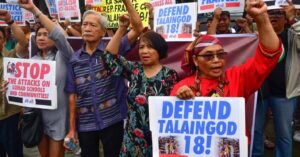
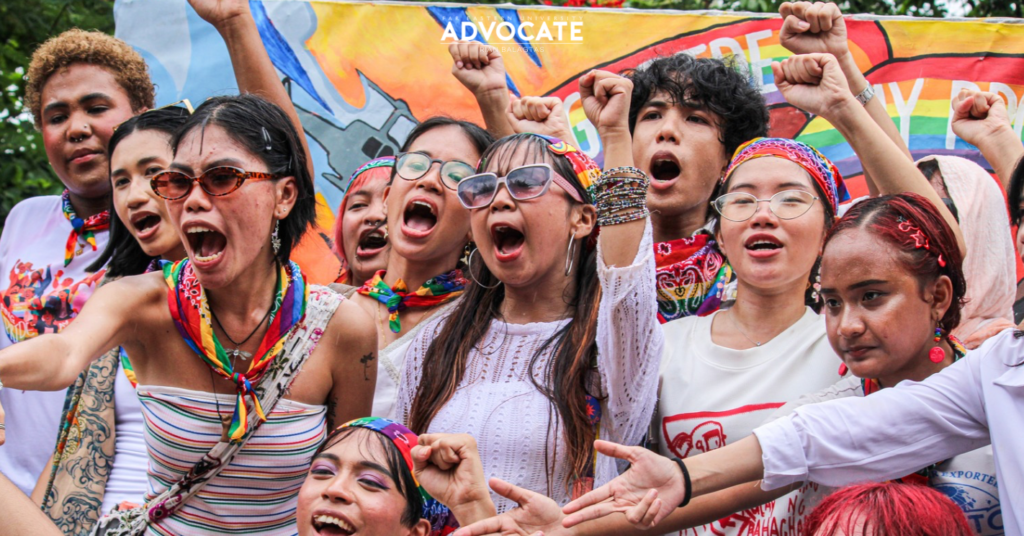
Calling for equality and more inclusive rights for the queer community, allies and other progressive groups staged a Pride protest in commemoration of the 32nd anniversary of Stonewall Manila at Liwasang Bonifacio yesterday, June 26.
Echoing the issues faced by the Lesbian, Gay, Bisexual, Transgender, Queer, Intersex, Asexual, and more (LGBTQIA+) community, this year’s theme ‘Ang Pride ay Protesta: Pahirap na Korap at Buwis Alisin! Giyerang Agresyon Lansagin’ emphasizes that their calls are not isolated, but rather, part of the broader societal constraint.
Renewed calls for bills, policies passage
Among the demands during the protest is the passage of laws intended to protect queer individuals, including the Sexual Orientation, Gender Identity, Gender Expression, and Sex Characteristics (SOGIESC) Equality Bill.
First introduced by former Senator Miriam Defensor-Santiago in 2000, the bill aims to protect different genders from discrimination and harassment, and provide access to basic services regardless of SOGIE.
However, over two decades since its filing, the bill has been facing delays in Congress, with its latest version filed as House Bill (HB) No. 5266 in the 20th Congress.
This pattern has been observed as other bills for the community remain stuck in Congress, such as HB No. 5474 or the Cagandahan Bill, which intends to let intersex individuals use their lived names and genders in legal documents.
While the SOGIESC Equality Bill only seeks to ensure basic human rights for queer individuals, National Teachers College Panday Sining member Rhys Simplicio stressed that its passage is purposely being delayed due to its misalignment with the administration’s interest in an interview with FEU Advocate.
“‘Yung mga rehimeng dumaan dine-delay talaga ‘yung pagpasa ng SOGIE Bill kahit basic human rights lang ‘yung hinihingi doon… Hindi naipapasa ‘yung mga ganitong bill kasi hindi naman siya nagsisilbi sa admin (The past regimes purposely delayed the passage of the SOGIE Bill even if it is just basic human rights. Bills like these are not being passed because it does not serve the administration),” he said.
Furthermore, Gabriela Partylist Secretary General Clarice Palce noted that aside from conservative and religious institutions, many individuals, as well as the government, still do not recognize the dignity and rights of the community.
“Marami pa kasing atrasado ang kaisipan, lalong-lalo na sa mga nakaupo ngayon sa pamahalaan. Marami diyan hindi pa rin kinikilala ‘yung dignidad, pagkatao, at karapatan ng ating mga kasamang LGBTQIA+ (There are still many close-minded people, especially those sitting in the government right now. Many of them still do not recognize the dignity, humanity, and rights of our fellow LGBTQIA+ members),” she stated.
Echoing Palce’s sentiments, University of the Philippines (UP) Baguio Alliance of Concerned Students member Kei discussed the influence of the Church in delaying the passage of the bill in the Senate despite the separate mandate between the state and church.
Further debunking the misconception that the policy only benefits the queer community, Palce highlighted that the SOGIESC Equality Bill protects every individual regardless of their gender and identity.
Beyond anti-discrimination mandates, Simplicio emphasized that the proposed bill should have more provisions focusing on the welfare of queer individuals such as their access to healthcare services.
Similarly, Palce urged the government to nationalize policies such as the Right to Care Card, marking it as a step to a more inclusive legal mandate for the LGBTQIA+ community.
“It is a step forward for the LGBT couples dito sa bansa natin at patuloy natin itinutulak na maging national policy… magkaroon ng precedent para sa pagkakaroon pa ng mga batas na nagpoprotekta sa at nagbibigay serbisyo para sa mga LGBT (It is a step forward for LGBTQIA+ couples in our country and we will continue pushing for it to become a national policy. So that it can serve as a precedent for the passage of more laws that protect and provide services for the LGBTQIA+ community),” she explained.
In 2023, Quezon City (QC)’s Local Government Unit (LGU) implemented the Right to Care Card program, allowing queer couples to make medical decisions for one another. This strengthens their autonomy in critical decision-making regarding healthcare-related matters.
Since then, LGUs such as San Juan, Biñan, and Parañaque along with other areas followed QC in the initiative in their local hospitals, acknowledging queer individuals’ decision as healthcare proxy for their partners in times of medical emergencies.
Aside from these ordinances, Simplicio underlined the need for an immediate implementation of a nationwide policy for the community’s welfare, stating that local policies provide only limited protection.
Pressing the government to implement the bill into a law, Parents Alternative for Early Childhood Care and Development, Inc. member Elle Buntag called for genuine administrative support from the state translated into concrete actions, further urging the government to address matters concerning socioeconomic issues.
“Kapag meron kang batas na magpoprotekta laban sa diskriminasyon batay sa kasarian at sa iba’t iba pang atake, doon mararamdaman ng queer community na at least may pakialam ang gobyerno sa aming mga karapatan. Aside sa pagsasabatas ng SOGIE Equality Bill, ‘yung pagtugon talaga sa mga basic problems ng society, kaya naman inaalala ‘yung diskriminasyon kasi nakakaapekto ‘to sa pangkabuhayan [namin] (When there are laws that protect people from discrimination based on gender, and from other forms of attacks, the queer community will at least feel that the government cares about our rights. Aside from passing the SOGIE Equality Bill, what we really need is for the government to address the basic problems in society, because discrimination has a direct impact on our livelihoods),” they expressed.
Aside from the SOGIESC Equality Bill, Kabataan Partylist - UP Diliman member Adrian noted the potential of the Sharmaine Bill to pave the way for acknowledging the lived names of individuals.
“Although mula sa meme ‘yung name niya, important siya na bill kasi para siya sa pag-recognize ng identity ng mga Filipino regardless kung straight ba sila, kung queer man sila. Tungkol lang naman talaga siya sa respeto (Although its name originated from a meme, it is still an important bill since it is about recognizing the identities of Filipinos, regardless of whether they are straight or queer. It is simply about respect),” he said.
The Sharmaine Bill or HB No. 9929, also known as ‘An Act Recognizing the Lived Identities, Providing Administrative Legal Recognition Process and Appropriate Funds,’ was filed by Akbayan representatives, seeking to recognize the lived identities of transgender and intersex individuals in legal documents without undergoing tedious legal processes.
Meanwhile, Adrian criticized President Ferdinand ‘Bongbong’ Marcos Jr.’s statement expressing support to the queer community, asserting that this should be reflected in the passage of laws regarding the welfare of the LGBTQIA+ individuals, including same-sex civil unions and the strengthening of the Anti-Violence Against Women and Their Children Act of 2004.
“Parang performative ‘yung pag-post ng Office of the President ng ‘Happy Pride Month’ daw, pero wala naman siya ginagawa para tuluyan na maipasa ‘yung SOGIE Bill at ‘yung same-sex civil union… ‘yung mga ibang bills tulad ng pag-strengthen ng Anti-Violence Against Women (The Office of the President posting ‘Happy Pride Month’ feels performative because President Marcos Jr. isn’t doing anything to ensure the passage of the SOGIE Equality Bill, the same-sex civil union, and other proposed measures, such as the strengthening the Anti-Violence Against Women law),” he stated.
While the Supreme Court recognizes the co-ownership of properties among queer couples under Article 148 of the Family Code, the Philippines has yet to enact a law granting same-sex marriages or unions.
However, filed by former Bagong Henerasyon representative Bernadette Herrera-Dy, HB No. 1015, or the proposed Civil Partnership Act, seeks to recognize the union and welfare of LGBTQIA+ couples, with the bill still pending in Congress.
Moreover, under Republic Act No. 9262, or the Anti-Violence Against Women and Their Children Act of 2004, women and their children should be legally protected from various forms of abuse such as physical and psychological violence.
Despite the law’s enactment, the World Health Organization noted last year that the cases of abuse are still prevalent among Filipino women aged 15 to 49, with 7.2 percent facing physical or sexual abuse from partners.
Queer discrimination, harassment
Despite existing policies from the administration to protect queer individuals, Buntag stressed that such efforts remain insufficient without the SOGIESC Equality Bill, as transgender individuals continue to face discrimination and suffer hate crimes.
“As long as wala tayong SOGIE Equality Bill, [existing policies] only can do as much… Araw araw may namamatay na transgender dahil sa hate crime at hindi natin gusto magpatuloy pa ‘yun kasi every minute [and] every second counts (As long as we do not have the SOGIE Equality Bill, existing policies can only do so much. Every day, transgender people lose their lives to hate crimes, and we do not want that to continue, because every minute and every second counts),” they emphasized.
Just this month, transwoman Bella Lutap was found dead in Nueva Ecija on June 19. Initial reports from the authorities stated that Lutap died from strangulation.
Furthermore, Adrian claimed that the administration has enabled the discrimination faced by the transgender community, citing the case of Jennifer Laude.
“Ang administration natin ay siyang mismong enabler para sa trans hate, or in general, hate against queer people. Nakikita pa lang natin ito nung pagpaslang pa lang kay Jennifer Laude na hinayaan ng presidente natin noon na si Rodrigo Duterte na mabigyan ng absolute pardon ‘yung tropa [niyang] kano na pumatay kay Jennifer Laude (Our administration itself enables the hate against transgender people, or in general, the hate against queer people. We already saw this in the case of Jennifer Laude’s killing, when former President Rodrigo Duterte allowed the American who killed Jennifer Laude to be granted an absolute pardon),” they explained.
Laude was strangled to death after United States (U.S.) Marine Lance Corporal Joseph Scott Pemberton discovered that she was a transgender, sparking discussions over transgenders’ safety and rights in October 2014.
While the Regional Trial Court found Pemberton guilty of homicide, former President Rodrigo Roa Duterte later granted him absolute pardon over the alleged miscalculation on his prison time and for his good conduct, resulting in his immediate deportation back to the U.S., where he only served four years out of his supposed 10 years in prison.
Following the decision, human rights advocates continue to denounce Duterte’s pardon, arguing that it disregards Laude’s life and dignity.
For Buntag, as long as transgender individuals continue to face transphobia and threats on their lives, the protest against these discriminations and violence will persist.
Pride as a protest, celebration
Organized by the Metropolitan Community Church and Progressive Organization of the Gays in the Philippines in 1994, the first Pride March in Asia started in Quezon City. It later became known as the Stonewall Manila, where several queer and progressive groups marched along the streets of EDSA to call for basic rights for queer individuals.
Looking back on the history of Pride in the Philippines, Palce noted that the annual gathering attended by queer individuals and allies originated as a protest to fight against the impunity experienced by the community, which is still being fought for up until this day.
“‘Yung Pride kasi historically laban sa karahasan [at] pasismo ng Estado laban sa mga LGBT members sa iba’t ibang panig ng bansa. Sinasabi natin na protesta ito kasi hanggang ngayon pinaglalaban natin ‘yung lugar ng sangkabaklaan dito sa lipunan natin (Pride has historically been a protest against state violence and fascism targeting LGBT members across the country. We say that Pride is a protest because we are still fighting for the place of the queer community in our society today),” she said.
Furthermore, Kei reminded participants that Pride is not just a celebration, but a protest against oppression, emphasizing that their demands for equality should not end with the month of June.
Aside from calls for the LGBTQIA+ community’s welfare, protesters also amplified the calls and demands from various sectors, denouncing the widespread corruption under the current administration, calls for a wage increase, the proposed Solar Power Project in Olangapo, Zambales, and justice for Toboso 19 victims.
Following Stonewall Philippines, similar celebrations were held during the Metro Manila Pride at Remedios Circle and Pride PH Festival 2026 at UP Diliman campus earlier today. Upcoming events include the Katalonan Pride at the Philippine Normal University on July 4 and Brigada Espasyo at the UP Diliman campus on July 8.
(Photo by Rian Balagtas /FEU Advocate)