SDev to follow student leaders appointment after postponing elections
- June 13, 2021 14:22
FEU Advocate
January 10, 2026 18:29

By Shayne Elizabeth T. Flores and Julliane Nicole Labinghisa
From the arrest of the former president and impeachment trials against the vice president to severe flooding and corruption scandals, the Philippines has faced various issues in recent months, marking 2025 as the year the country’s ingrained systemic injustice became palpable to Filipinos to the point of nationwide dissent. As public outcry continues to linger and echo throughout the streets, it is important to keep our hunger for justice and accountability alive by recalling what transpired over the eventful 12 months that have passed.
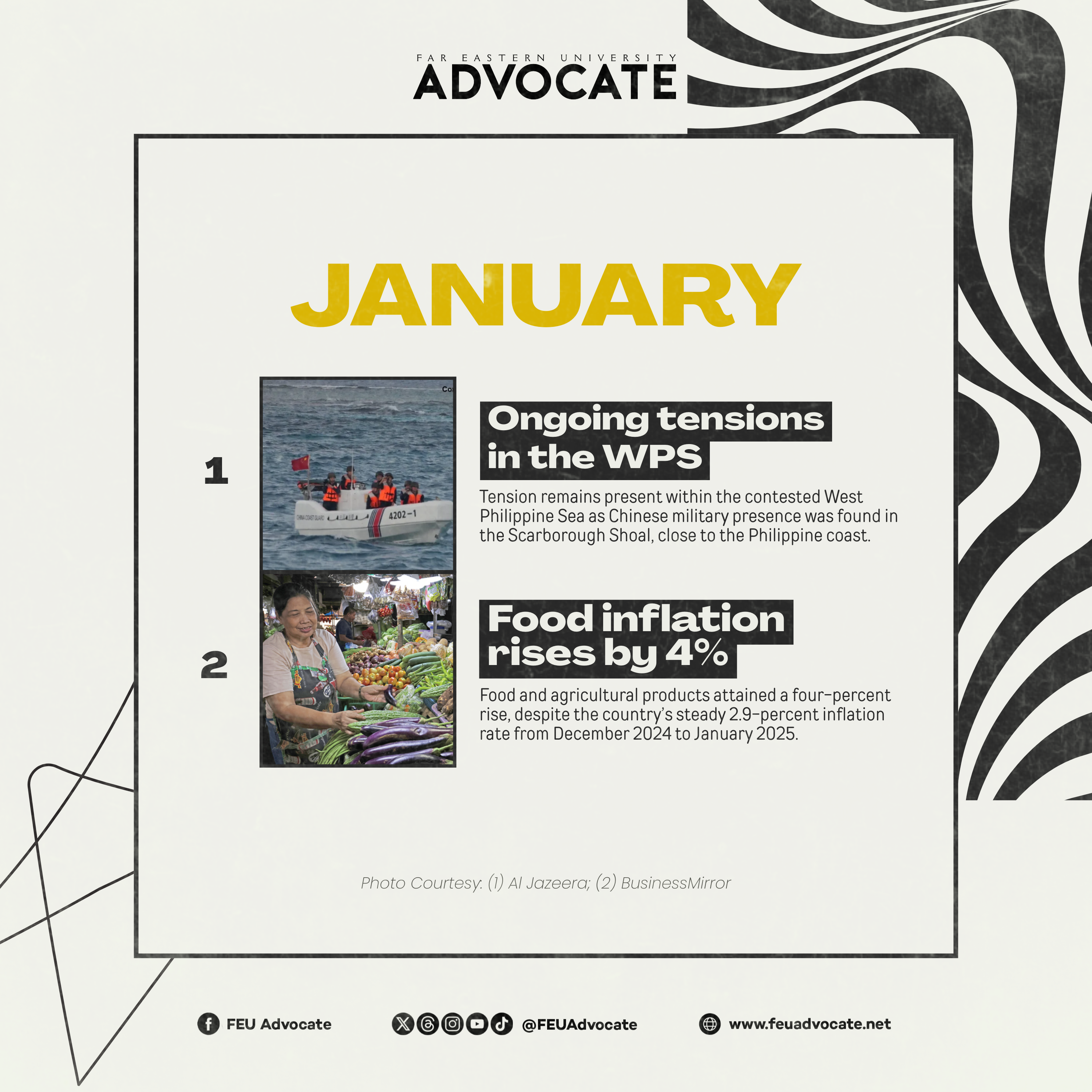
The Philippines eyes legal action as response to perceived aggression due to the presence of a large Chinese coast guard ship patrolling in the Scarborough Shoal and as close as 77 nautical miles or 143 kilometers toward the northwestern coast of the Philippines.
Moreover, despite the 2016 Arbitral Ruling and continuous negotiation of the two countries over the West Philippine Sea, tension remains present, causing confrontations and ‘dangerous harassment’ from the Chinese coastguard and navy.
According to the Philippine Statistics Authority, food inflation rose to four percent due to the faster inflation rate of agricultural products such as vegetables, despite the inflation rate of 2.9 percent from December 2024 to January 2025 remaining unchanged.
Meanwhile, the inflation in food, other commodities, and transportation is attributed to the typhoons experienced in the country last year, while the rise in pork prices is due to the African swine fever affecting some parts of the country.
Moreover, as the interest rates were still within the government’s two-to-four-percent target range, it gave the Bangko Sentral ng Pilipinas room to cut interest rates to stimulate economic growth.
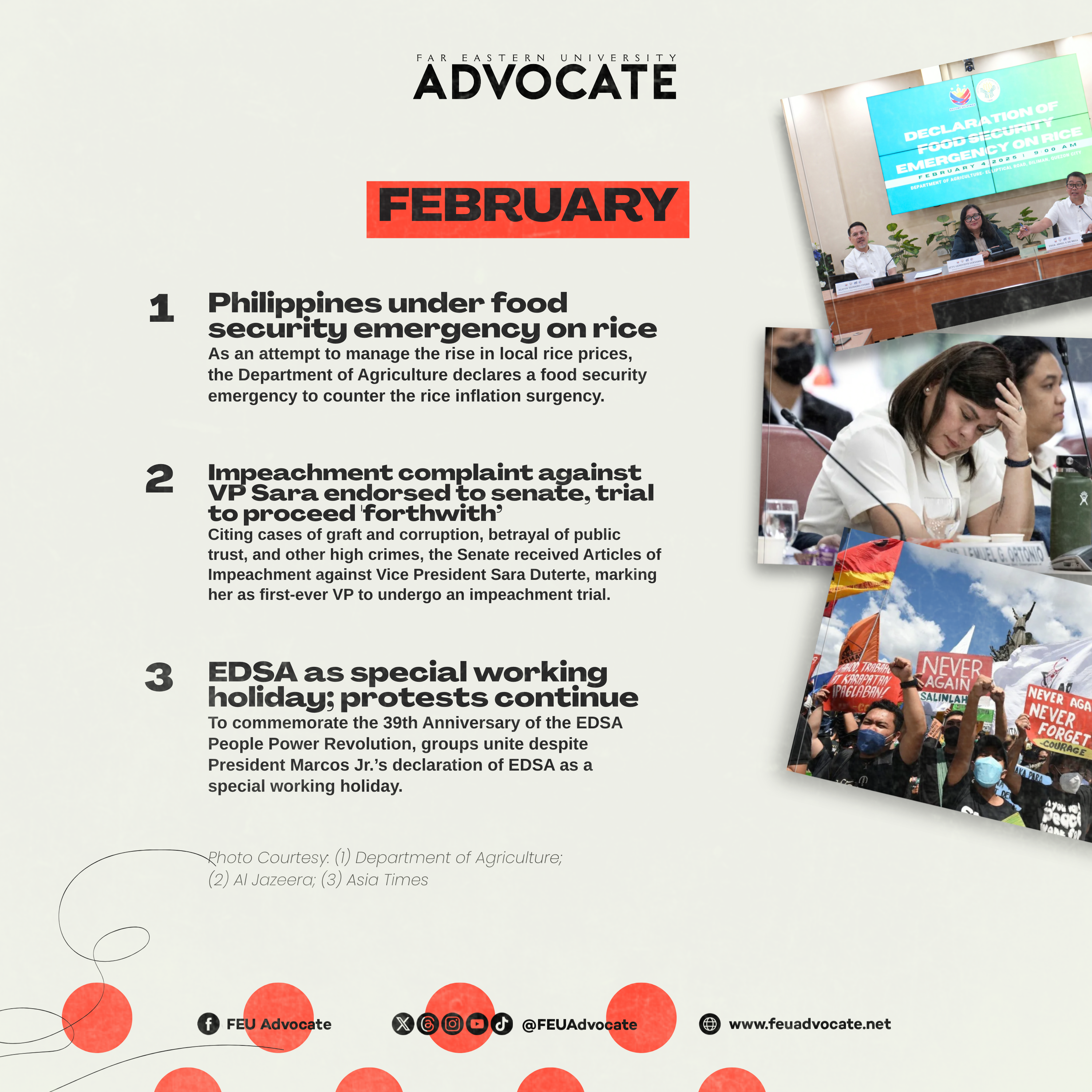
To stabilize and tame the ‘extraordinary’ rise in local rice prices, the Department of Agriculture (DA) declared a food security emergency on rice, ensuring that it will remain accessible to the public.
This decision is aligned with Republic Act 12078, an amendment to the Rice Tariffication Law, which allows the DA Secretary to declare a food security emergency in response to an extraordinary rise in prices.
Prior to the declaration, the Federation of Free Farmers warned the DA of compromising the farmers’ livelihood alongside the declaration of the food security emergency, which would allow the National Food Authority to release around 300,000 metric tons of rice.
After receiving 215 out of 306 signatories of the impeachment complaint from the lower house of the Congress, Senate Secretary Renato Bantug received the Articles of Impeachment against Vice President (VP) Sara Duterte.
Citing graft and corruption, betrayal of public trust, and other high crimes, Duterte was set for trial by the Senate ‘forthwith.’
If not for the delays, Duterte would have been the first-ever vice president of the Philippines to be impeached by the House of Representatives and tried by the Senate.
Marking the 39th anniversary of the 1986 EDSA People Power Revolution, President Ferdinand Marcos Jr. declared February 25 as a special working holiday, in contrast to the previous non-working holiday commemoration.
Despite the anniversary being a special working holiday, thousands of protesters gathered at the People Power Monument in Quezon City, with some universities shifting to alternative learning modes as an act of defiance and commemoration.
Moreover, the declaration was seen by former senatorial candidate Teddy Casiño as a downplay of an historic event, urging people to participate and remember the spirit of EDSA.
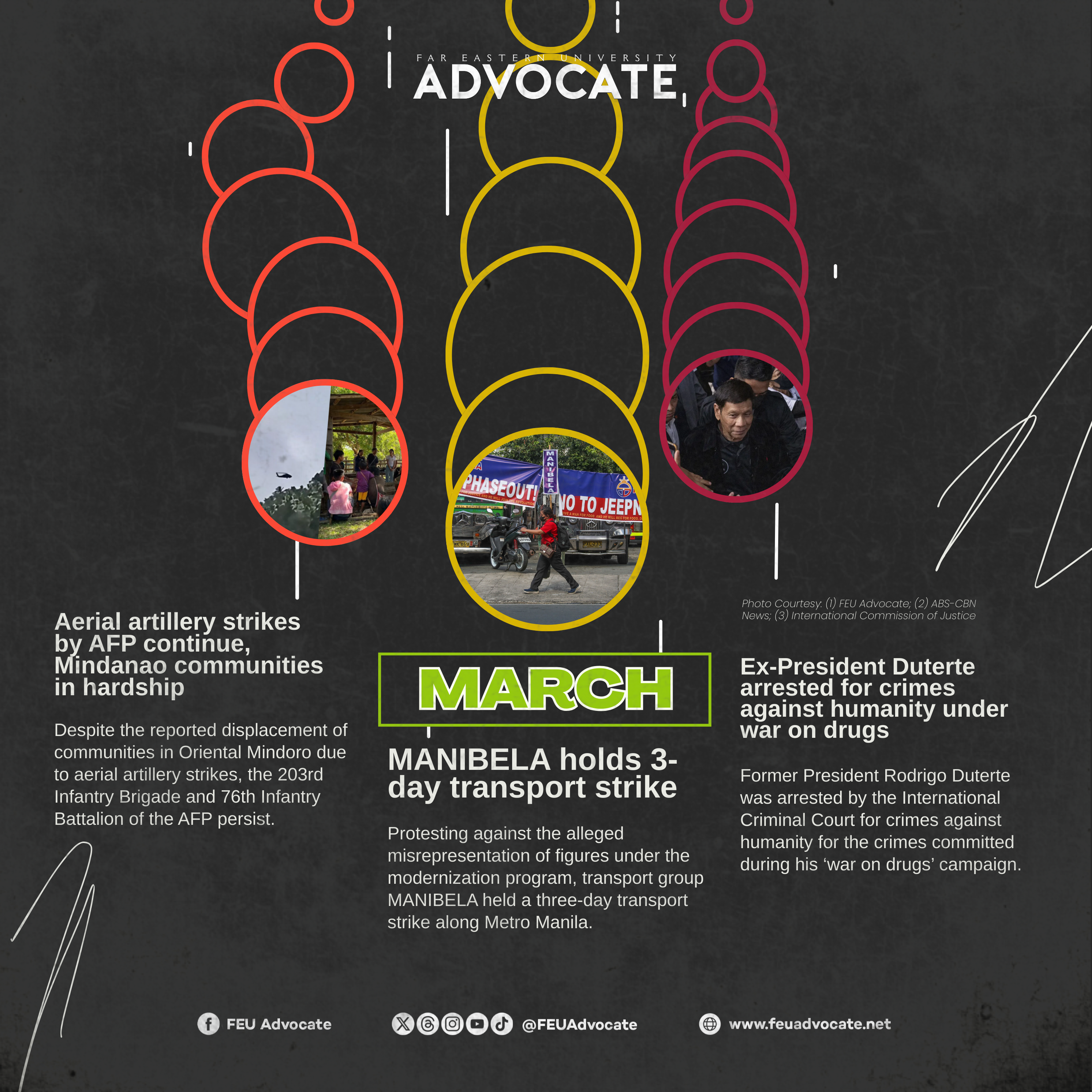
Strikes persisted over the farmers and Mangyan-Hanunuo tribe by the 203rd Infantry Brigade and 76th Infantry Battalion of the Armed Forces of the Philippines (AFP), despite the displacement of Barangay Misong, Pola, Oriental Mindoro residents due to the same aerial artillery strikes.
Moreover, there have been aerial attacks by the AFP near Cabanglasan town, Bukidnon, reportedly causing trauma and destruction of land over the local farming and indigenous Lumad communities.
This was condemned by the International Coalition for Human Rights in the Philippines, citing previous attacks over Mindanao, failing to identify the distinction between civilians and combatants, a violation of the International Humanitarian Law.
MANIBELA conducted a three-day nationwide transport strike to protest against the alleged misrepresentation of consolidation figures under the PUV modernization program, last March 24 to 26.
This urged some universities in Metro Manila, including Far Eastern University, to shift learning modalities.
Following the arrest warrant issued by the International Criminal Court Pre-Trial Chamber I last March 7, former President Rodrigo Duterte was arrested by the International Police and the Philippine National Police on March 11.
With the charge of crimes against humanity during his ‘war on drugs’ operation, which caused thousands of deaths, including children, Duterte is currently detained in The Hague, Netherlands while awaiting trial.
While victims of the war on drugs perceive the arrest of Duterte as a step closer to justice, supporters of the former president staged protests, claiming that it has ‘no basis’ and is unjust.
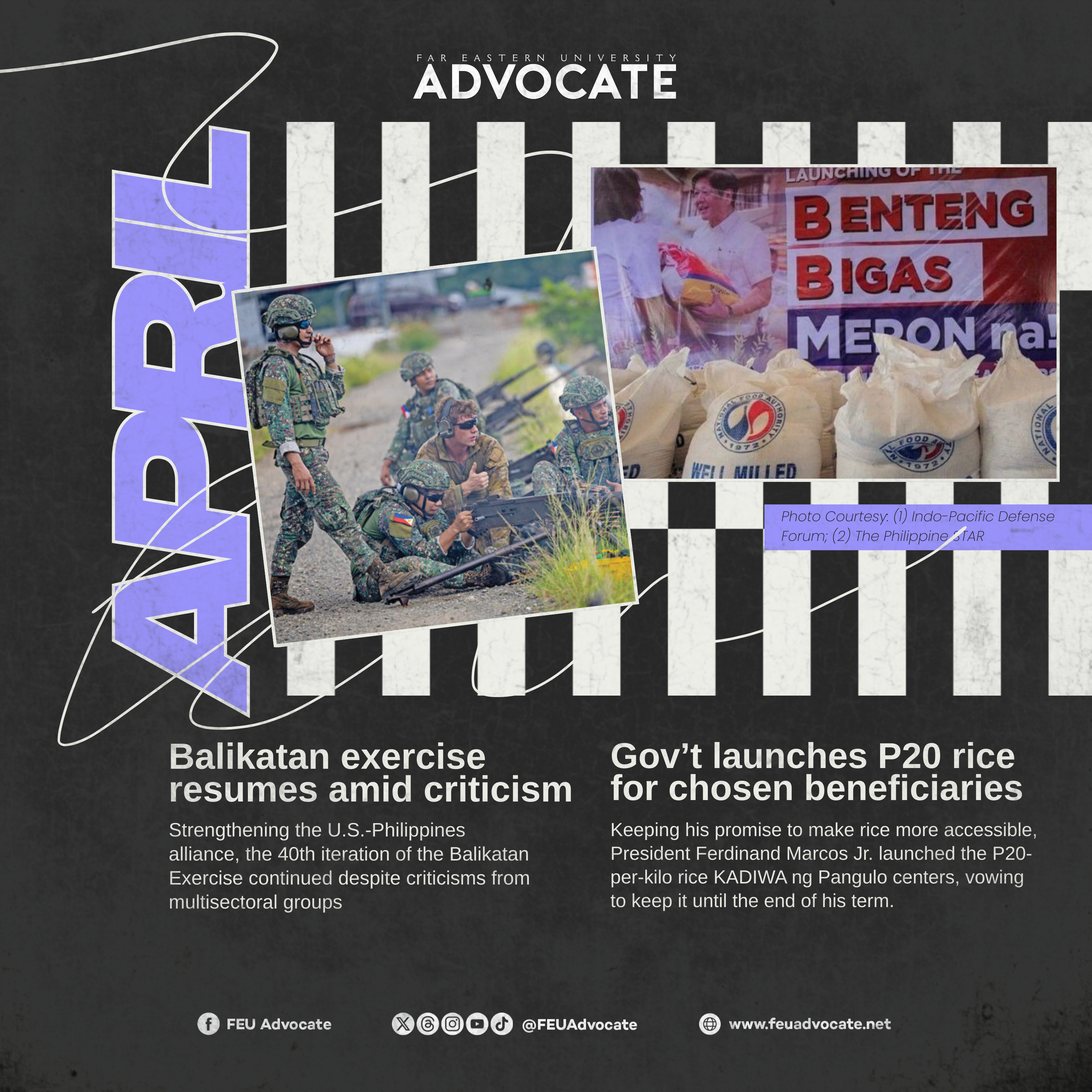
The 40th iteration of the annual Balikatan Exercises between the Philippines and the United States commenced in support of the U.S.-Philippines Mutual Defense Treaty to strengthen military-to-military coordination last April 21.
However, multi-sectoral groups including Bagong Alyansang Makabayan criticized the Balikatan Exercises for disrupting local livelihoods and threatening regional peace and stability.
In addition, protests were held to condemn the exercises, claiming that it surrenders national sovereignty.
In an attempt to fulfill the promise of more affordable and accessible food for the Filipinos, the Department of Agriculture kickstarted the ₱20-per-kilo rice program in KADIWA ng Pangulo centers in Visayas and some parts of Luzon.
The rice to be sold are sourced from the National Food Authority, while its beneficiaries were allowed to purchase up to 30 kilos of rice per month.
However, contrary to the ‘affordable’ front, IBON Foundation noted that the initiative is merely a stop-gap measure and is not a sustainable solution to recurring problems in local supplies of rice.
President Marcos Jr. vows to continue the ₱20-per-kilo rice initiative until the end of his term in 2028, aiming to gradually expand its implementation nationwide.
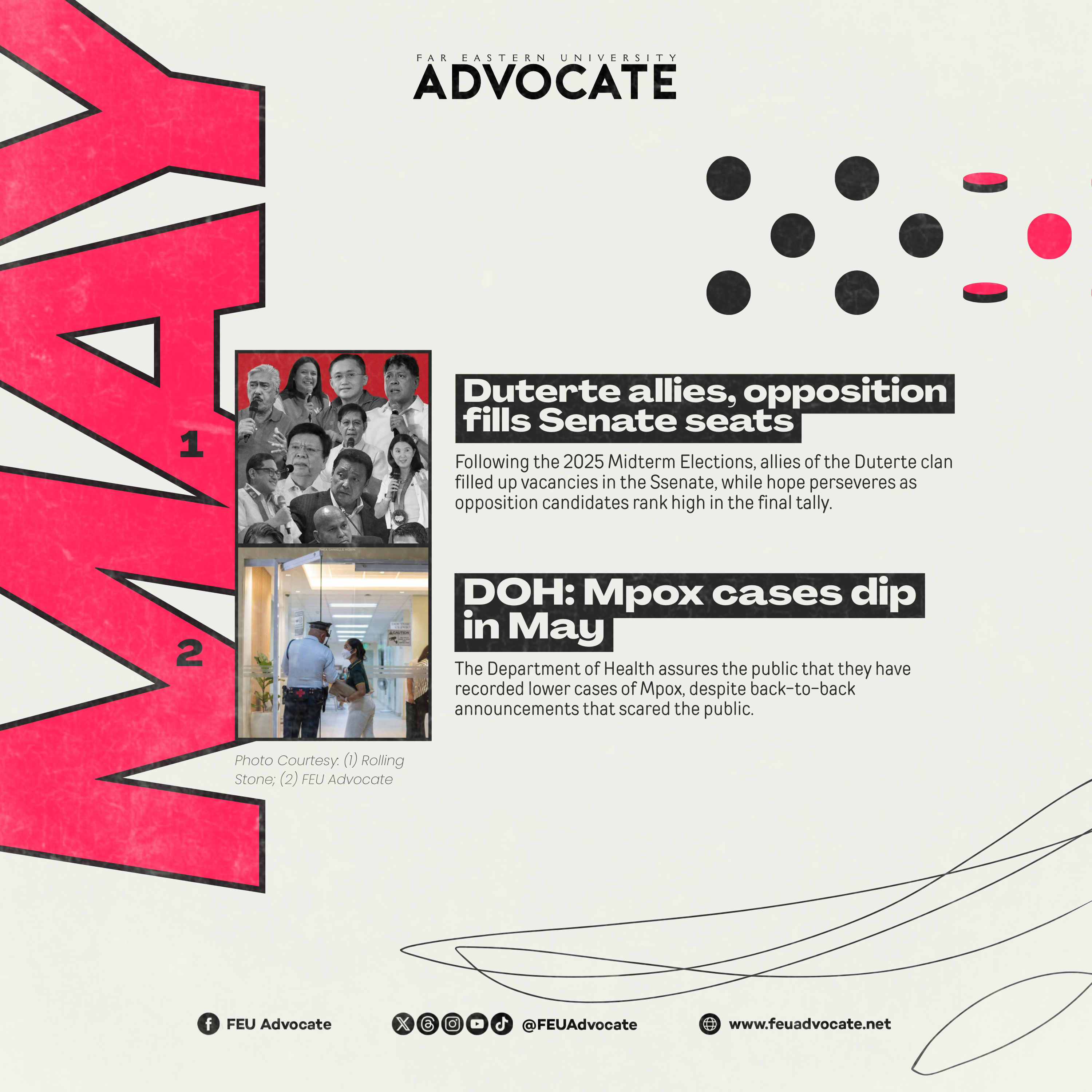
Allies of the Duterte clan filled the vacant seats during the midterm elections, after Vice President Sara Duterte announced a formal split with political tandem President Ferdinand Marcos Jr. last 2024.
Christopher ‘Bong’ Go, Ronald ‘Bato’ dela Rosa, and Rodante Marcoleta won in the elections placing first, third, and sixth, respectively.
On the other hand, key figures in the opposition, Paolo Benigno ‘Bam’ Aquino IV and Francis ‘Kiko’ Pangilinan, secured the second and fifth senatorial seats, respectively.
Despite back-to-back warnings of monkeypox (Mpox) infections all over the country, the Department of Health (DOH) assured the public that the number of cases dipped in May, amounting to a total of 911 cases recorded since 2024.
In addition, the DOH also clarified that the confirmed cases of Mpox is the milder Clade II variant, which is not the Clade I variant that triggered the global public health emergency.
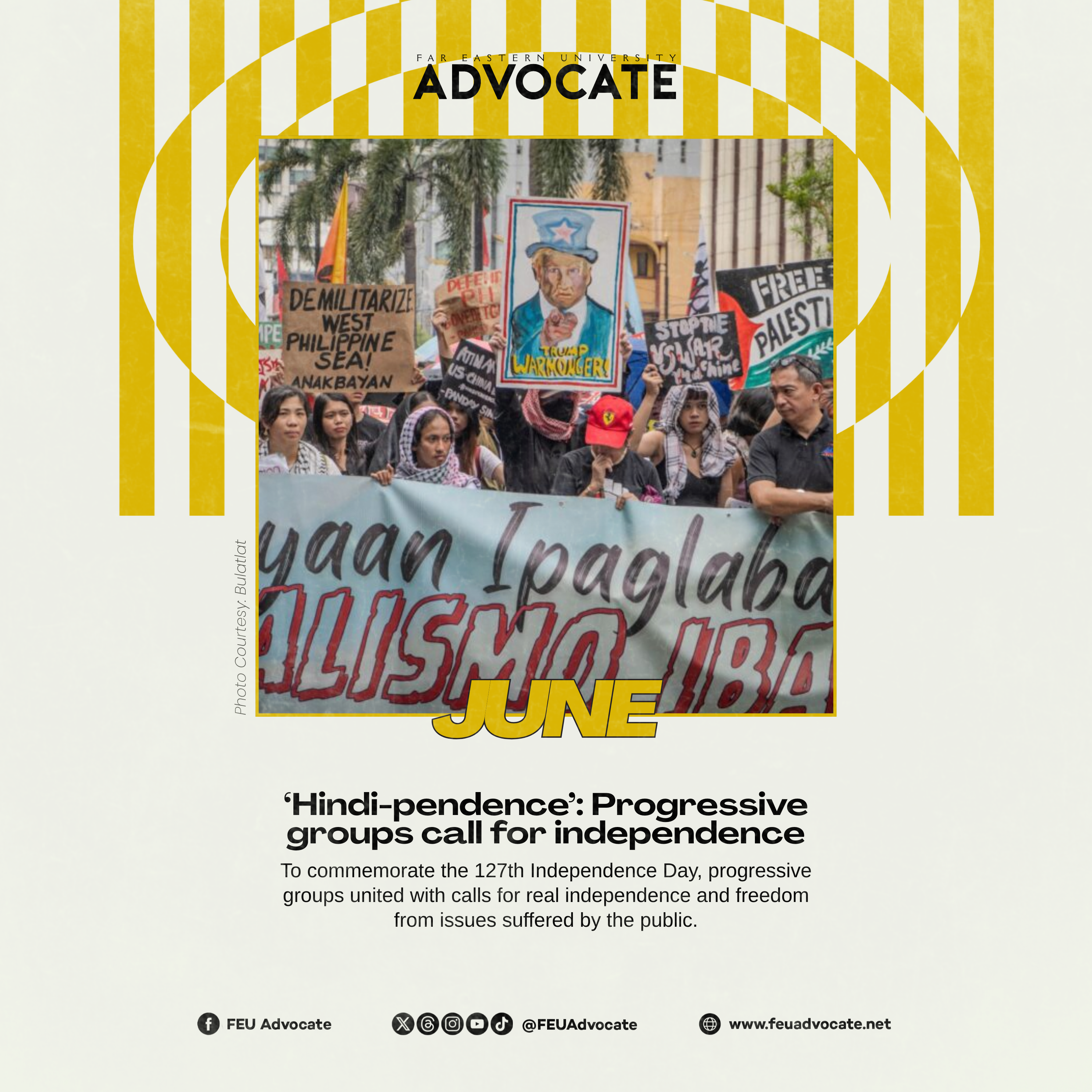
In commemoration of the 127th Anniversary of Independence in the Philippines, progressive groups staged demonstrations with calls for independence against various issues suffered by the public.
Calls involved the conviction of Vice President Sara Duterte, the negative effects of the Balikatan Exercises, and the end to imperialism and the U.S.-Israel genocide in Palestine.
Moreover, labor groups slammed the adjournment of the bill to increase the minimum wage by the 19th Congress without ratification, deeming freedom to be unattainable if exploitative working conditions are allowed to continue.
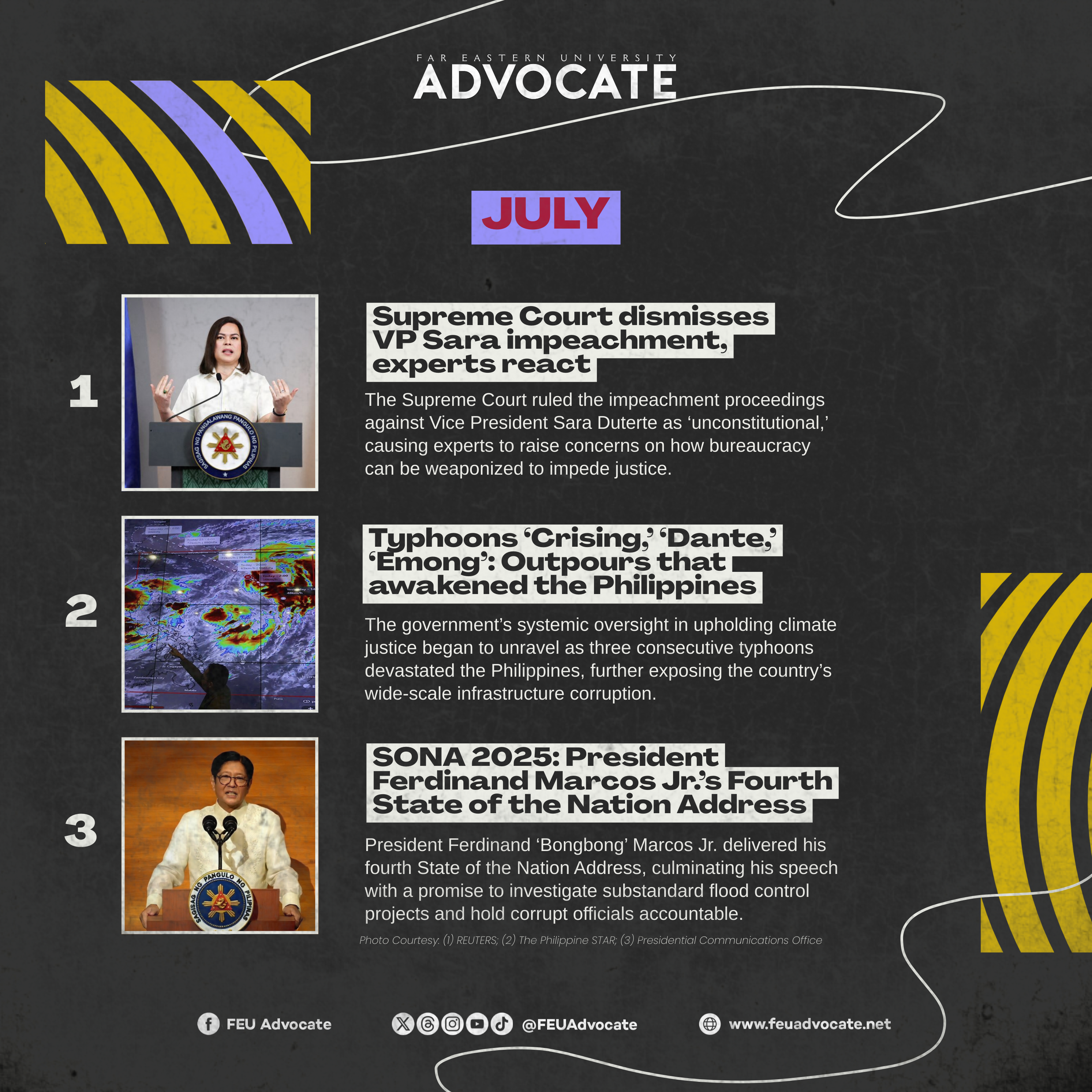
Much to Vice President Sara Duterte’s favor, the Supreme Court (SC) ruled the impeachment proceedings against her as ‘unconstitutional,’ due to its supposed violation of the due process and was barred by the 1987 Constitution’s one-year rule in light of earlier complaints.
However, several experts questioned the ruling’s grounds, asserting that the SC could have disregarded the prior complaints in order to preserve the House’s constitutional duty to proceed with the impeachment process.
Furthermore, they deemed the SC’s dismissal as a ‘dangerous precedent’ for future legal proceedings and mechanisms as bureaucracy proves capable of impeding accountability.
From the development of tropical cyclone Crising, followed by Dante, and culminated by Emong, the latter half of July has been one of the most difficult times for Filipinos in terms of falling victim to the climate crisis—a manifestation of the government’s failure to provide climate justice.
Brought by the combined effect of the typhoons and the consequent amplification of the southwest monsoon, approximately 9.7 million Filipinos were affected, while 37 died as per the National Disaster Risk Reduction and Management Council.
With several portions of Metro Manila and surrounding provinces left submerged in floodwaters for days, the ‘Filipino resilience’ narrative began to unravel as the government’s continued failure and negligence in disaster response became more apparent, exposing the country’s widespread infrastructure corruption.
Days after the onslaught of the typhoons, President Ferdinand ‘Bongbong’ Marcos Jr. delivered his fourth State of the Nation Address (SONA), highlighting ‘progress’ in the country’s education, economy, healthcare, and agriculture as supposedly prompted by his administration’s key projects.
While Marcos Jr. acknowledged his administration's shortcomings and the public’s dissatisfaction, he failed to fully address other pertinent issues, including former President Rodrigo Duterte’s International Criminal Court arrest and the progress toward attaining justice for extrajudicial killings victims, Vice President Sara Duterte’s alleged misuse of funds and impeachment, and the ongoing West Philippine Sea conflict.
Notably, the president concluded his speech with a pledge to investigate substandard flood control projects and hold corrupt officials accountable.
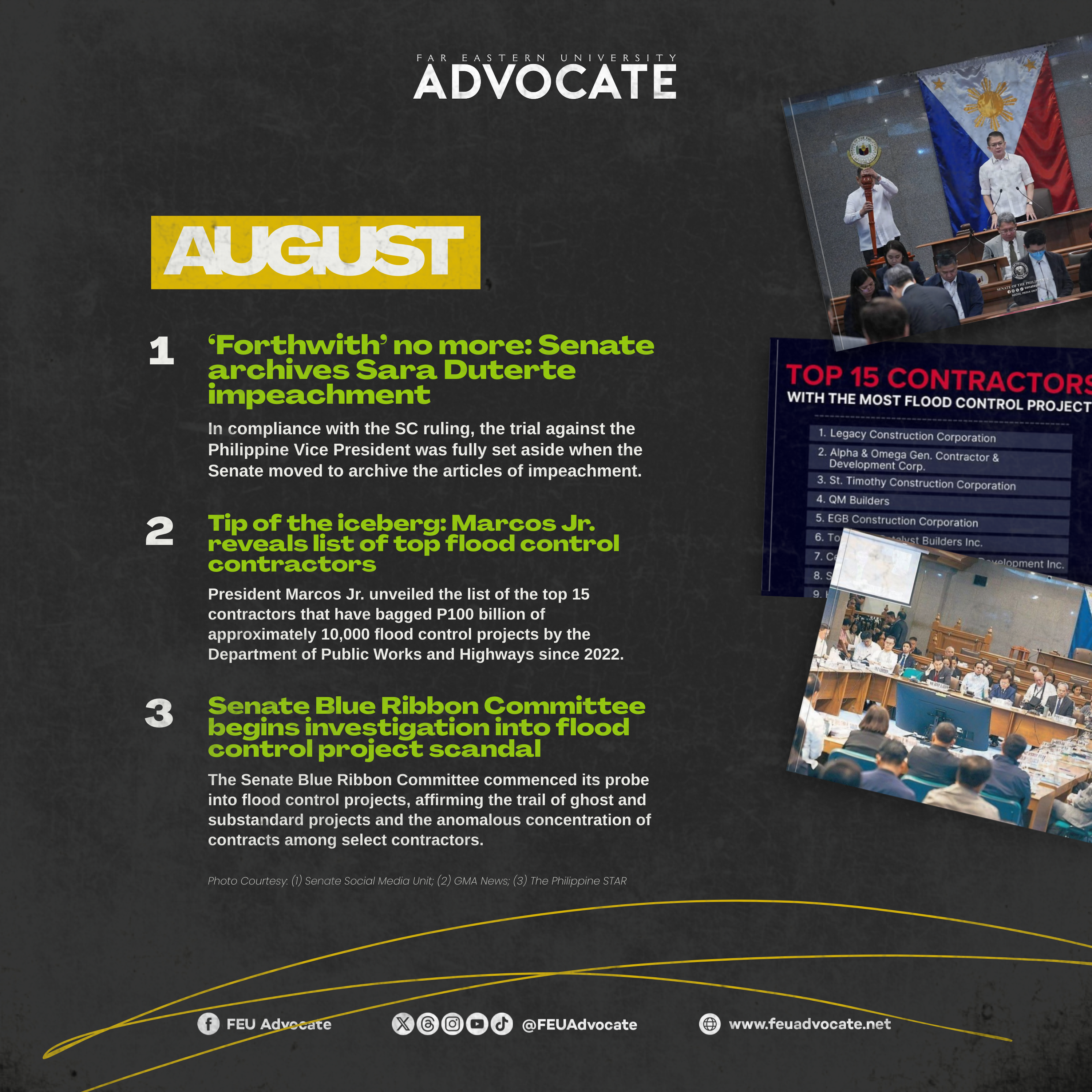
Despite 66 percent of Filipinos wanting Sara Duterte to address her impeachment charges, the trial against the Vice President was set aside when the Senate moved to archive the articles of impeachment in compliance with the SC’s earlier ruling.
A total of 19 senators, half of whom were members of the ‘Duterte bloc,’ voted in favor of the motion. Meanwhile, four voted against and one abstained.
As such, the case will not be acted upon unless the SC reverses their dismissal of the impeachment trial and until the Senate themselves vote to resurrect it from the archives.
Keeping his pledge during the fourth SONA, Marcos Jr. unveiled the list of the top 15 contractors that bagged 20 percent or ₱100 billion of approximately 10,000 flood control projects by the Department of Public Works and Highways (DPWH) since 2022.
Marcos Jr. further flagged dubious patterns, such as the majority of flood control projects being located in areas that are not flood-prone. Several projects in different locations also allegedly incurred the same contract cost, which could be attributed to similar designs despite differences in terrain.
With the recent flood devastation, the initial probe heightened concerns about the legitimacy of the flood control projects and their funding, as well as the DPWH’s oversight. Along with this, the president launched the ‘Sumbong sa Pangulo’ website, encouraging citizens to monitor and report concerns regarding flood control projects in their areas.
The Senate Blue Ribbon Committee commenced its probe into flood control projects, affirming the trail of ghost and substandard projects and the anomalous concentration of contracts among select contractors.
DPWH officials admitted the existence of ghost projects in Bulacan, specifically linking the majority to contractor Wawao Builders that received P9 billion worth of projects nationwide, with ₱5.9 billion concentrated in Bulacan alone.
Many projects were also executed without feasibility studies and without consultation with the River Basin Control Office, the agency mandated to draft a master plan for flood control. Additionally, it was alleged that only 13.5 percent of the allotted funds are utilized in the construction of flood control projects, while the rest is funneled to government officials and contractors’ pockets.

After being shaken up by the impeachment trial and polarizations among members, the Senate reached a new turning point after ousting Senator Francis ‘Chiz’ Escudero and electing Minority Leader and former Senate leader Vicente ‘Tito’ Sotto III as the new senate president.
This came after Escudero’s link with one of the top 15 flood control project contractors, Centerways Construction and Development Inc., was revealed. Specifically, the corporation’s president Lawrence Lubiano admitted that he donated ₱30 million to Escudero's 2022 senatorial campaign.
Consequently, the Senate’s majority and minority blocs also shifted, with the Duterte bloc now part of the minority led by Senator Alan Peter Cayetano, while Senator Miguel Zubiri serves as the leader of the 15-member majority bloc.
Led by Vince Dizon as its new secretary, the DPWH filed a criminal complaint with the Office of the Ombudsman against former officials and contractors involved in the flood control scandal on the grounds of graft and corruption.
This includes Sarah Discaya and Ma. Roma Angeline Rimando of St. Timothy Construction Corporation, Mark Arevalo of Wawao Builders, Sally Santos of SYMS Construction Trading, and Robert Imperio of IM Construction Corporation. Additionally, former Bulacan First District engineer Henry Alcantara, former district engineer Brice Hernandez, and former assistant district engineer Jaypee Mendoza were also tagged in the complaint.
Other congressmen were also reported to have received kickbacks from the anomalous projects, such as then-House Speaker Martin Romualdez, former Ako Bicol party-list Representative Elizaldy ‘Zaldy’ Co, Senator Jinggoy Estrada, and Senator Joel Villanueva.
In time with the 53rd anniversary of Martial Law, over 100,000 Filipinos flooded the streets of Manila to protest against flood control corruption as part of the ‘Baha Sa Luneta: Aksyon na Laban sa Korapsyon’ at Luneta and the ‘Trillion Peso March’ at the EDSA People Power Monument.
Amid the follow-up demonstration in Mendiola, some protesters and the police were embroiled in violent clashes against each other, while journalists on-ground also fell victim to police violence. Approximately 216 protesters were arrested, almost half of which are minors.
Meanwhile, Makabayan lawmakers raised concerns about the unjust detainment and oppression of detainees as the majority of them had not been allowed to contact their families nor given access to a lawyer.
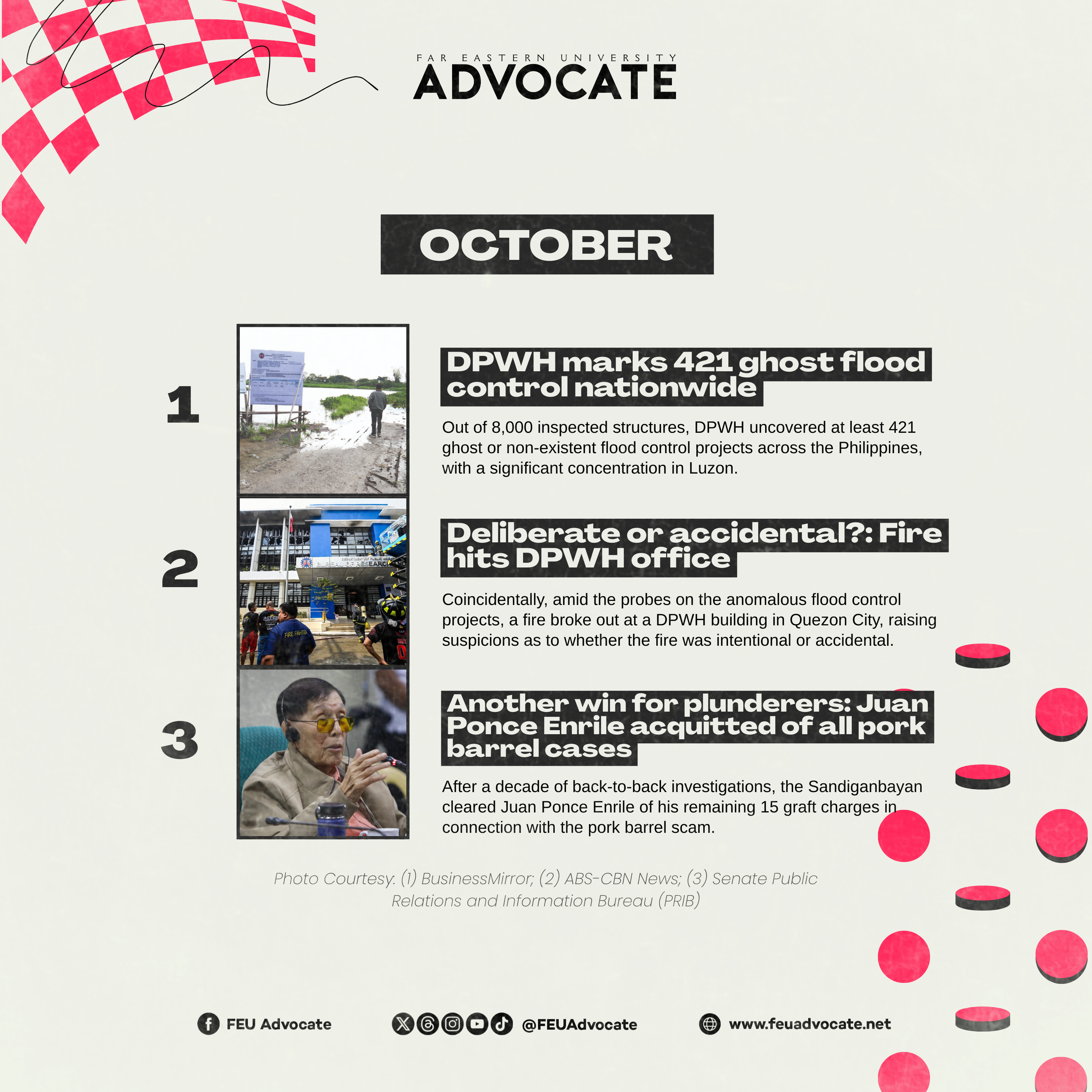
Out of 8,000 inspected structures, DPWH uncovered at least 421 ghost or non-existent flood control projects across the Philippines, with a significant concentration in Luzon.
The investigation was conducted with the help of the Department of National Defense, Armed Forces of the Philippines, Philippine National Police, and the Department of Economy, Planning, and Development.
DPWH Secretary Vince Dizon submitted the list to the Independent Commission for Infrastructure, which is set for field validation.
Coincidentally, amid the probes on the anomalous flood control projects, a fire broke out at the DPWH Bureau of Research and Standards building in Quezon City.
Per the Bureau of Fire Protection – National Capital Region’s initial investigation, burned items include documents, gadgets, office tables, and other equipment. The affected building was also disclosed as Region 4-B’s testing site, where many DPWH Region 4-B documents were stored.
To determine whether the fire was intentionally started to conceal evidence or an accident, the Office of the Ombudsman ordered an investigation into the incident.
After a decade of back-to-back investigations, the Sandiganbayan cleared former Senate President and Chief Presidential Legal Counsel Juan Ponce Enrile of his remaining 15 graft charges in the alleged diversion of ₱172.8 million of his pork barrel funds.
According to the Sandiganbayan, “the prosecution failed to prove their guilt beyond a reasonable doubt.”
This sets the continuation of big politicians’ ‘winning streak’ in evading full accountability for the pork barrel scandal, which was first achieved by Senator Jinggoy Estrada and former senator Bong Revilla, who were likewise cleared of their charges.
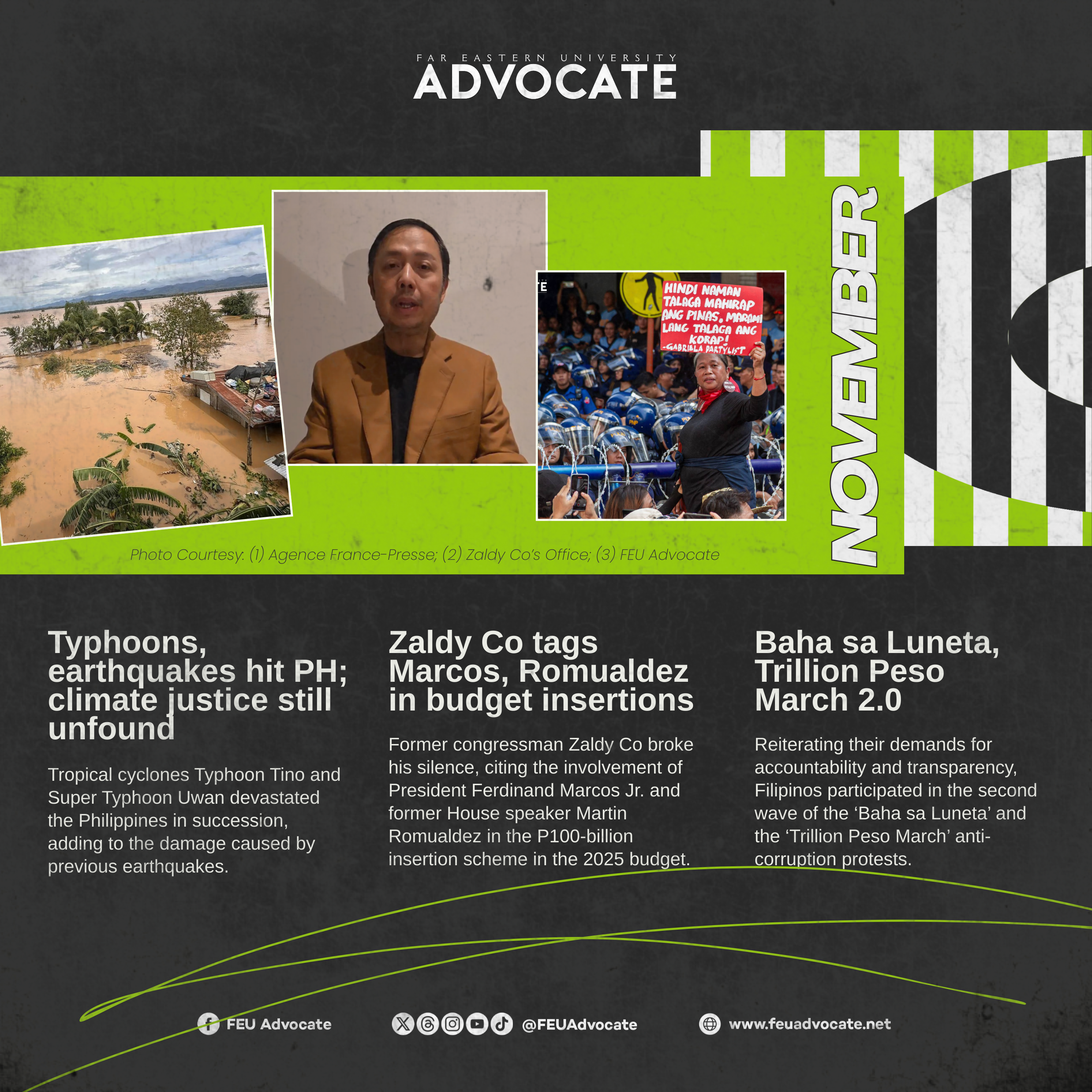
As if keeping in step with the investigation into the corruption in flood control projects, tropical cyclones Typhoon ‘Tino’ and Super Typhoon ‘Uwan’ devastated the Philippines in succession.
Deemed as the country's deadliest tropical cyclone in 2025, Tino resulted in 269 deaths. Meanwhile, 28 were reportedly killed due to Uwan.
The devastation came roughly a month after the 6.9-magnitude earthquake that struck Cebu, which was followed by another series of quakes across the country. Overall, the quakes and typhoons claimed approximately 370 lives—a harsh reminder to Filipinos that climate justice remains unfound.
Still outside of the Philippines’ premises, former congressman Zaldy Co broke his silence in a video statement, citing that President Ferdinand Marcos Jr. and former House Speaker Martin Romualdez instructed him to insert ₱100 billion worth of projects in the 2025 budget.
He also claimed that he left the country on July 19 to seek medical aid abroad, but was advised by Romualdez not to go home.
The former House speaker refused to comment on Co’s claims. Meanwhile, the president dismissed the accusations and challenged the congressman to return to the Philippines.
Reiterating their demands for accountability and transparency, Filipinos participated in the ‘Baha sa Luneta 2.0’ and the second wave of the ‘Trillion Peso March’ anti-corruption protests at the same time as the commemoration of Bonifacio Day.
While less violent than the September protest, the mass mobilization was delayed as it struggled against tighter restrictions, with cops reportedly citing the ‘no permit, no rally’ policy. The march toward Mendiola was also halted by a police barricade, causing the demonstration to conclude earlier.
Per the Manila Police District, over 3,000 Filipinos attended the protest, including progressive organizations, student-leaders, farmers, and other multi-sectoral groups.
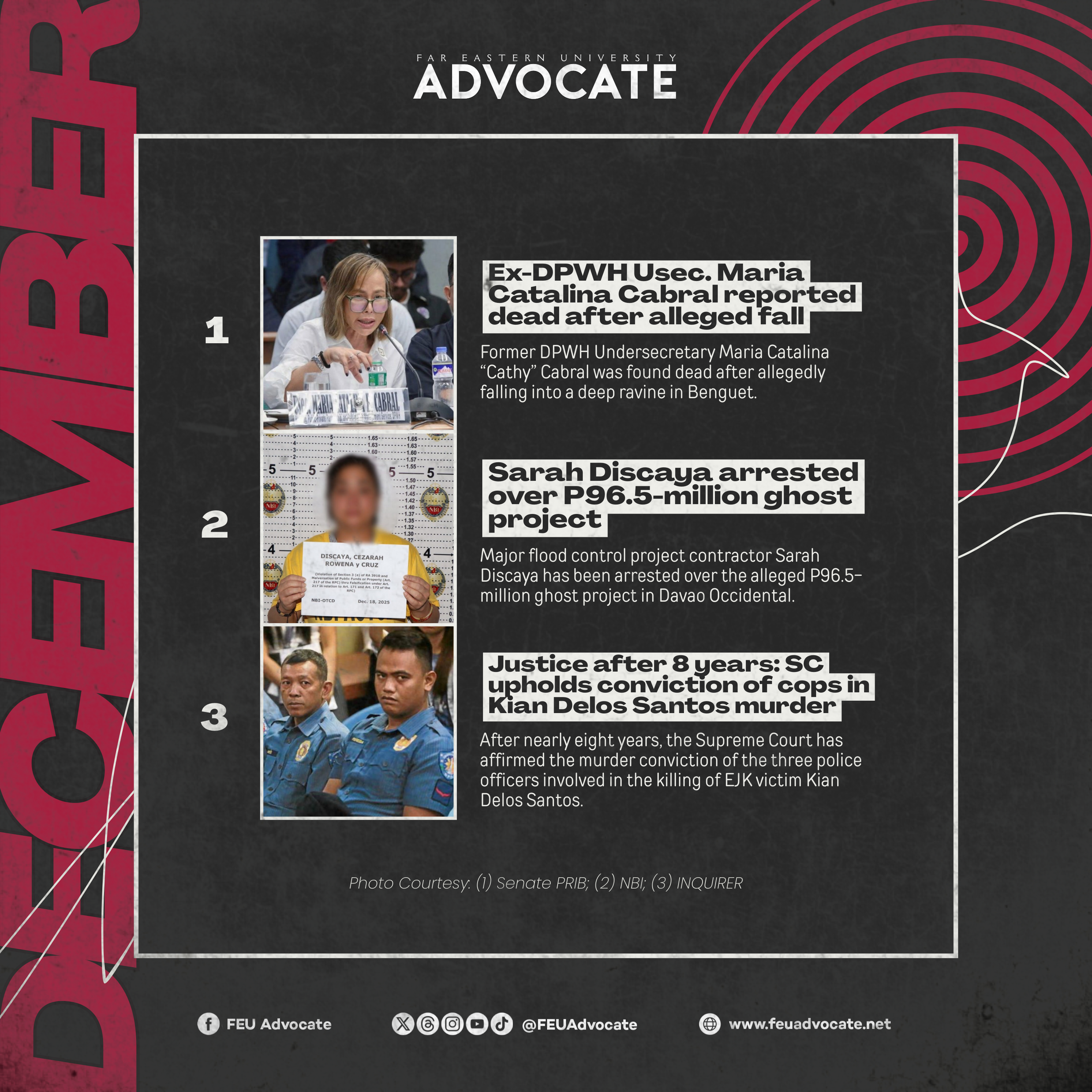
Cited to have played a major role in the corruption of infrastructure projects, former DPWH Undersecretary Maria Catalina “Cathy” Cabral was found dead after allegedly falling into a deep ravine in Benguet.
Amid the investigations last September, Cabral was accused of initiating unjust budget insertions into the proposed 2026 national budget through the DPWH among congressmen. Days later, Cabral resigned from her post in DPWH.
The Philippine National Police has underlined that the pieces of evidence points to Cabral’s death being suicide-related. However, the findings remain inconclusive, and the investigation remains ongoing.
St. Timothy Construction Corporation (STCC) owner Sarah Discaya has been arrested over the alleged ₱96.5-million ghost project in Davao Occidental.
Along with Ma. Roma Angeline Rimando of STCC, Discaya and some DPWH Davao Occidental District Engineering Office officials and personnel are facing graft and malversation charges.
This marks the second case concerning the flood control corruption that reached the courts, with the first being the graft and malversation cases filed against Zaldy Co and other DPWH officials last November.
Nearly eight years after the killing of 17-year-old Kian Delos Santos, the Supreme Court has affirmed the murder conviction of the three police officers involved in the incident.
Delos Santos was one of the extrajudicial killing victims of former Rodrigo Duterte’s war on drugs campaign. He was shot by the policemen during a drug bust operation, with authorities justifying that he fought back despite witnesses and evidence saying otherwise.
Proven guilty of murdering the victim with intention, the suspects were sentenced to reclusion perpetua or up to 40 years of imprisonment. They are also required to pay Kian’s heirs ₱275,000 in damages.
While considerable progress has been observed over the months, the majority of the issues that have arisen in 2025 remain half-addressed, with some even set aside entirely. As 2026 approaches, it is critical that we do not grow complacent nor desensitized to the surge of injustices in our country. Rather, we must keep these issues in mind, assert our rights to dissent, and continue to demand the government for accountability—ensuring that not another year will pass without conclusive justice and conviction.
(Layout by Mary Nicole Tabella/FEU Advocate)