
Gonzales shows gratitude to FEU crowd
- October 30, 2023 06:54
FEU Advocate
March 23, 2026 20:48
By Jiann Delumen
Amid surging fuel prices, President Ferdinand Marcos Jr. suspended the previously approved fare hikes for public utility vehicles by the Land Transportation Franchising and Regulatory Board (LTFRB), garnering protests from transport groups and mixed reactions from commuters.
The LTFRB had initially approved provisional fare adjustments on March 17 across several modes of public transportation, including a ₱1 increase in the minimum fare for traditional jeepneys—from ₱13 to ₱14 for the first four kilometers—with additional per-kilometer charges for succeeding distances.
For modern jeepneys, fares were set to ₱17 for the first four kilometers, with an additional ₱2.40 per succeeding kilometer, while city and provincial buses, taxis, and transport network vehicle services were also granted corresponding increases based on updated fare matrices.
The board likewise approved a ₱15 minimum fare for ordinary city buses and ₱18 for air-conditioned buses for the first five kilometers.
Additionally, airport taxis were granted a ₱40 increase in flag-down rates, while point-to-point buses were allowed to raise fares by up to 15-percent, depending on existing route rates.
The adjustments were scheduled to take effect on March 19 following petitions from transport groups citing rising fuel prices, maintenance costs, and daily operating expenses.
However, on March 18, Marcos ordered the Department of Transportation (DOTr) to suspend the implementation, saying it was ‘not the right time’ to impose additional costs on commuters.
The DOTr then immediately deferred the rollout, in compliance with the president’s directive, which he said was meant to 'help ease the burden on commuters.’
Fuel price spike drives fare petitions
The approved fare hike came amid a sharp increase in fuel prices, which transport groups asserted had increased operating costs.
On March 17, oil firms implemented price hikes, with diesel increasing from ₱20.40 to ₱23.90, gasoline up to ₱16.60, and kerosene going from ₱6.90 to ₱8.90.
The Department of Energy earlier warned that diesel prices could reach as high as ₱114 per liter.
The surge has been linked to geopolitical tensions affecting global oil supply, particularly in the Middle East, which has driven up import costs for fuel-dependent economies such as the Philippines.
In response, transport groups filed fare hike petitions, arguing that existing rates are no longer sufficient to cover operating expenses.
Commuters weigh relief against drivers’ losses
Meanwhile, some commuters expressed mixed views on the suspension of the planned increase, citing both financial relief and concern for drivers’ declining income.
In an online interview with FEU Advocate, first-year Bachelor of Arts in Communication student Jillianne Dizon shared that the suspension may help ease the burden on those who rely on limited daily allowances.
“Even small increases add up over time, especially for students who commute every day,” she explained, adding that a fare hike would have likely forced her to cut back on food or school-related expenses.
At the same time, Dizon acknowledged that rising fuel prices have reduced drivers’ earnings, stressing that the suspension, while beneficial to commuters, may be unfair without sufficient support for drivers.
“Hindi naman puwedeng pera lang lagi ang ibigay as a form of help (Financial aid alone cannot always be the form of help)… The government should focus more on long-term solutions, like addressing fuel prices, improving public transportation systems, or creating policies that support both commuters and drivers,” she asserted.
Similarly, her fellow communication freshman Alyssa Simbahan recognized that while commuters are spared from added costs, drivers may have lost a chance to offset rising fuel expenses.
“Parang na-condemn sila into a fruitless cycle… halos wala ring mapupunta sa kanila (It’s as if they are trapped in a fruitless cycle with little to no income for themselves),” she said, referring to how drivers’ earnings are largely consumed by fuel costs.
Simbahan also raised concerns over the long-term effectiveness of government assistance, particularly the sustainability of subsidies.
“For one, kailangan i-consider ’yung frequency ng payout. Magiging sapat ba ‘yung ₱5,000 na subsidy? At the end of the day, livelihood ng drivers ’yung pamamasada… so maganda sana kung matulungan din sila ng gobyerno na ma-maximize ’yun (the frequency of payouts should be considered. Will the ₱5,000 subsidy be enough? At the end of the day, driving is their livelihood, so it would be better if the government helps them maximize their income),” she added.
Transport strikes, sector demands intensify
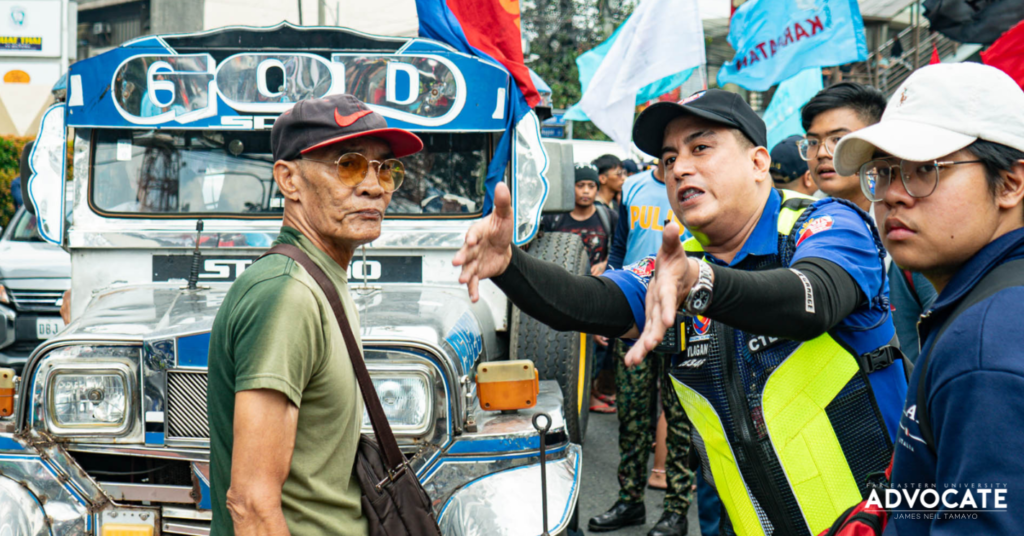
Following these developments, transport groups announced and carried out nationwide protests and strikes from March 19 to 20.
The Pinagkaisang Samahan ng mga Tsuper at Operator Nationwide (PISTON) expressed that the strike aimed to pressure the government to address soaring fuel prices.
In a statement, PISTON described the ₱1 fare hike as an ‘insult to drivers’ with diesel prices nearing ₱120 per liter, noting that jeepney drivers could spend as much as ₱3,600 daily or up to ₱90,000 monthly on fuel expenses.
The group reiterated its demands, including the removal of value-added tax and excise taxes on fuel, the rollback of oil prices to ₱55 per liter, a proposed ₱5 fare increase to help drivers recover losses, and an increase in workers’ pay toward a living wage.
They also called for broader policy reforms, including the scrapping of the Oil Deregulation Law and the nationalization of the oil industry, as part of long-term solutions to rising fuel costs.
Meanwhile, former Bayan Muna Representative Teddy Casiño questioned the suspension, cautioning that the lack of fare increases could force some jeepneys and buses off the road due to mounting losses.
“Huwag daw pahirapan ang commuter—eh kung hindi itataas ang pasahe, walang jeep at bus na magbibiyahe dahil lugi. Sino ang mahihirapan? Eh ‘di commuter ('Commuters should not be burdened,' he said—but if fares are not increased, jeepneys and buses may stop operating because of losses. Who will suffer? Ultimately, the commuters),” he pointed out.
Government rolls out stopgap measures
In place of the suspended fare hike, the government expanded support measures for transport workers, including fuel subsidies and financial assistance programs.
Cash assistance of up to ₱5,000 was provided to drivers, particularly tricycle operators, to help offset rising fuel costs, with payouts distributed through coordinated government activities in Metro Manila.
As part of these measures, Marcos announced plans to ‘expedite and increase support’ for transport workers, including fuel subsidies for qualified drivers and operators.
He also noted that the possible suspension or reduction of fuel excise taxes remains under study and would depend on global oil price trends.
In addition, authorities announced a 50-percent fare discount on MRT-3 and LRT-2 rides starting March 23 to help reduce commuting costs.
The DOTr said it is also exploring further interventions, including expanded free-ride programs and additional fare discounts in rail systems.
(Photo by James Neil Tamayo/FEU Advocate)