Pagtindig sa mga Daluyong: Isang Panawagan Tungo sa #LigtasNaBalikEskwela
- July 27, 2021 10:55
FEU Advocate
February 02, 2026 10:30
By Ishia Eleanor F. Marquez
As the cost of goods and bills steadily rises, people continue to experience difficulties with employment and low wages, struggling to cope with the country’s substandard living situation.
According to the Social Weather Stations’ (SWS) November survey, 36 percent of Filipinos reported that their quality of life had ‘worsened’ over the past year, marking a four-percent increase from September’s 32-percent survey results which, according to the SWS, is a new low for the administration.
Despite the negative perspectives, another survey by the SWS revealed that 44 percent of young adults and new graduates showed optimism for a better quality of life in the Philippines for the next 12 months, while 38 percent believed it will stay the same, and 8 percent remained uncertain, expecting the quality of life to deteriorate this year.
While the survey outcomes contrast, economic challenges persist, with many struggling to cope with the country’s living conditions, as 2025 ended with an average inflation rate of 1.7 percent.
Unemployment predicament
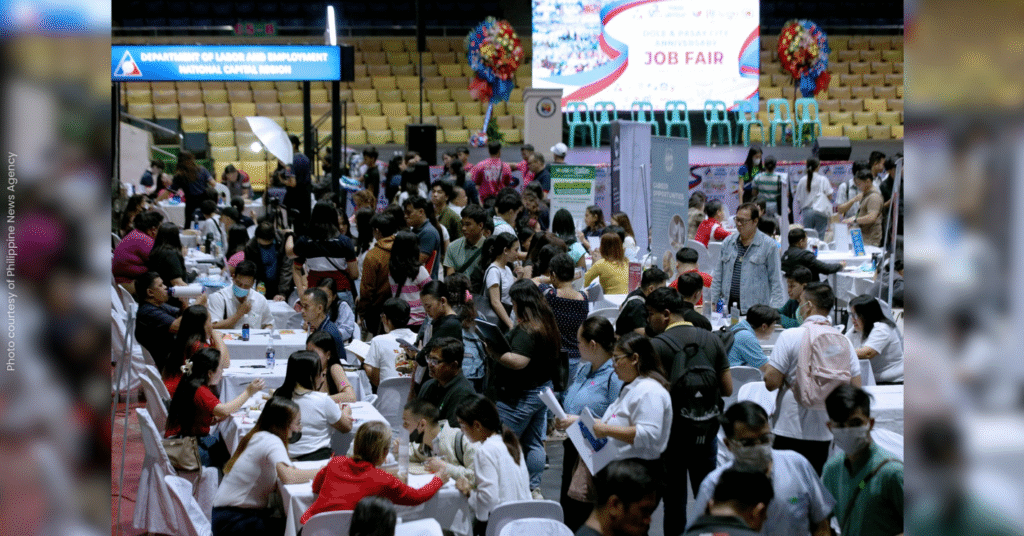
In 2025, the Philippine Statistics Authority tallied 2.25 million jobless Filipinos last November, a significant decrease from October’s 2.54 million but still substantially high.
For high school teacher John Dem Santos, the low employment rate stems from the government’s inability to provide sufficient jobs, as the country lacks support from foreign investors due to rampant corruption.
“Hindi nila ginagawa nang buong husay ang trabaho nila para na sa gayon ay magkaroon ng mga investor galing sa ibang bansa… Labanan nila ang korapsiyon… [ito] lang naman ang humahadlang sa atin para ang Pilipinas ay magkaroon ng foreign investors (They are not doing their job effectively to have more investors from other countries. That is why they should fight corruption. Because this is the only thing holding us back from gaining more foreign investors),” he shared in an online interview with FEU Advocate.
In line with this, Philippine Chamber of Commerce and Industry President Ferdinand Ferrer stressed the lack of action the government takes over those who are involved in the flood control project scandal, emphasizing that if no actions will be taken further against the widespread corruption, the country will face a decline in foreign investments.
“They [the foreign investors] are looking at our country, what the government is doing, [and] what the private sector is doing to assist the government [in this situation]… If the process is slow, the credibility and the confidence of investors, both local and international, will keep on declining,” he said.
Additionally, Bangko Sentral ng Pilipinas revealed that the foreign direct investments to the Philippines declined to almost 40 percent last year, from $1.1 billion in October 2024 to $642 million last October 2025.
Meanwhile, for first-year Bachelor of Science in Psychology and working student Irish Gail Merceda, other than looking for work that fits her school schedule, limited job opportunities due to low wages and high requirements adds to her difficulties.
“Many people struggle with finding jobs, and even those who do work face challenges sustaining them due to long hours and low pay… The difficulty comes from limited job opportunities… Employers often require experience or skills that students or young workers may not have yet,” she explained in a separate interview.
Additionally, Marc Lester Racelis, who is currently working as a museum guide, stated that finding jobs was difficult as a new graduate, with companies preferring applicants who have sufficient experience to work rather than those who are just degree holders.
“‘Yung mga ilang workplace, okay lang daw sa kanila na fresh graduate [applicants], ayun nga lang, kailangan ng experience… Paano naman ‘yun kung hindi ka naman talaga nagtrabaho noong ikaw ay nag-aaral (Some workplaces say that they are fine with fresh graduate applicants, but they must have work experience. How would that work if you did not actually work while you were studying)?” Racelis questioned in another interview.
Furthermore, Commission of Higher Education Chairperson Shirley Agrupis stressed the high unemployment rate among college graduates, as the June 2025 Labor Force Survey revealed that 38.2 percent of fresh graduates were unemployed, slightly higher than the 36.5-percent rate last December 2024.
Racelis also said that the government should not be ‘upset’ with many Filipinos choosing to work abroad if they continue to provide limited job opportunities with high requirements but low wages.
Last December, Department of Migrant Workers Secretary Hans Leo Cacdac shared that from 2.2 million last 2024, 2.57 million overseas Filipino workers (OFWs) were deployed last year to different countries, emphasizing the demand for Filipino workers abroad.
Moreover, the minimum wage for OFWs increased last August 2025 from $400 to $500 or approximately ₱28,000, significantly higher than the monthly wage in the Philippines.
In addition, Santos wishes to clear the misconception some people have on the unemployed, claiming the government is to blame for the high rate of jobless Filipinos as it is their job to provide work for the people.
“Kaya raw mahirap ang tao, [kasi] tamad… Kung titingnan natin ang mga magsasaka, manggagawa, hindi mo naman sasabihin na ayan ay mga tamad… Kahit ano[ng] gawin mo na sipag, kung ang sistema ng pagbabayad sa manggagawa ay ganito... Kung andiyan pa rin ang pang-aabuso [ng gobyerno], hindi tataas ang antas ng pamumuhay ng mga tao (Some say the poor are the way they are because they are lazy. If we look at our farmers, our workers, you cannot say that they are lazy. No matter how much you work, if the wage system is still this low and government abuse still exists, the standard of living will not improve),” he emphasized.
Concerns on wages, cost of goods
Under Wage Order No. NCR-26, the National Wages and Productivity Commission (NWPC) increased the minimum wage rate by ₱50 last July 2025 for those who work at Metro Manila, raising the daily rate from ₱645 to ₱695, depending on the sector and establishment.
Additionally, the NWPC approved a wage hike of ₱50 for domestic workers in Metro Manila, as per the Wage Order No. NCR-DW-06, which will increase the minimum per month from ₱7000 to ₱7,800, to be effective on February 7, 2026.
However, even as the salaries increased, the cost of goods and several utilities also faced a spike. Meralco is implementing an additional ₱0.2816 per kilowatt-hour starting March this year as the company recovers a ₱31-billion rate hike imposed by the Energy Regulatory Commission.
Moreover, the cost of food items like meat, vegetables, and rice increased before the holidays due to the onslaught of typhoons, leaving Filipinos to compromise the tight budget of ₱500 for Noche Buena amid the increasing price of goods.
Santos expressed dismay over the spike of price on goods, noting that the ₱50 increase on wages contribute little to easing the financial burdens of the nation, especially to those who have a family to feed.
“Wala naman [akong pamilyang] binubuhay, ako lang naman mag-isa, at tumutulong [ako] onti-onti sa magulang [ko]… Pero, hindi pa rin nagkakasiya [ang sahod ko]... Paano pa kaya ‘yung ibang tao na mas mababa pa sahod sa akin na may binubuhay na pamilya (I don’t have a family to support, I live on my own, and I help my parents little by little. Even then, my salary is still not enough. What more for other people who earn less than I do and have families to provide for)?” the teacher stressed.
Similarly, Racelis also deemed the almost ₱700 a day inadequate if people include bills, rents, savings, and emergency funds, comparing the prices of goods from then to now.
Likewise, Merceda shared her struggles on maximizing her income for her daily needs.
“As a working student, I face the challenge of stretching my income to cover both school [expenses] and personal needs… [like] transportation, food, and other daily expenses [that] add up… Sometimes, it is hard to save or plan for unexpected costs... Balancing work, school, and daily expenses can be stressful,” the psychology student expressed.
Both Santos and Merceda urged the government to not rely on band-aid solutions, like short-term works and other monetary assistance such as ayuda, but to instead provide long-term support, such as salary increase and job opportunities for Filipinos.
Additionally, Racelis condemned the government’s misuse of taxes, pressing officials to properly allocate the funds on basic needs, particularly on education and public health.
“Ang laki-laki ng pera na nilalaan [mula sa buwis natin] para doon [sa mga proyekto]... Hindi siya [napakikinabangan] sa ating mamamayan… Ang dami dapat natin pinagtutuonan [ng] pansin… ‘Yung edukasyon… lalo na rin sa public health… Bakit hindi ‘yun ‘yung nabibigyan ng husto at sapat na pera (The amount of money allocated from our taxes is huge. It is not really being used for the benefit of the people. There are so many things we should be focusing on. Our education and public health as well. So why is it not being given proper and sufficient funding)?” he questioned.
The government provided a record-high ₱1.34-trillion budget for the education sector this year, with ₱67 billion allotted for Republic Act 10931, otherwise known as the ‘Universal Access to Quality Tertiary Education Act,’ and additional fundings for Tertiary Education subsidy. In addition to this is ₱68 billion for classroom construction resources and ₱25.6 billion for school-based feeding programs.
With various medical groups criticizing the government’s lack of funding for the Philippine Health Insurance Corporation despite its increasing discretionary funds last year, the officials raised the funding for the health sector to ₱411.2 billion this year, along with other benefits and a zero-billing policy for those who earn low income.
Varying wages on provinces, cities
Further, Santos and Racelis also called for the abolishment of the provincial and Metro Manila rate for wages, advocating for equal salaries regardless of sector and location.
“Dapat buwagin na ‘yang provincial rate na ‘yan; dapat pantay-pantay na lahat ng sahod sa lahat ng parte ng Pilipinas... Hindi mo naman puwede sabihin na mas mababa ang presyo ng bilihin sa probinsiya kaysa sa Maynila (The provincial rate should be abolished; wages should be equal in all parts of the Philippines. You can not say the price of goods is lower in the province than in Manila),” the teacher said.
Under the Republic Act 6727, also known as Wage Rationalization Act of 1989, wages were set vary across regions based on the cost of living.
Enacted under then-President Corazon Aquino’s term, the law aimed to primarily promote productivity and ensure a ‘decent standard’ of living among workers, maintaining an equal exchange between businesses and workforces.
However, several labor groups denounced the law as the basic necessities continue to rise in every province, noting that the price difference of goods between cities and provinces is minimal and not enough to justify the lower wages in rural areas.
Moreover, workers also believe that equal work deserves equal pay regardless of location.
To counteract the low economic outlook, Palace Press Officer Claire Castro shared that the government plans to implement reforms in benefit to economic growth.
(Photo courtesy of Philippines News Agency)