Kabataang Tamaraw, nagsanib-puwersa upang buhayin ang diwa ng EDSA
- February 26, 2025 22:40
FEU Advocate
February 19, 2026 15:01

By Crystal Soriano
In its ninth season, ‘TAMDULA IX: Unfiltered’ graced the stage with four unique stories, each offering a lesson wrapped in layers of laughter and emotion. This two-hour dulaan turned the simple, everyday moments we often overlook into reflections of life. Through plays such as ‘Detention,’ ‘Genesis,’ ‘Finders Keepers,’ and ‘Phone-Free Zone,’ the production reminded audiences that the smallest, most familiar experiences can carry the biggest truths about ourselves and the world around us.
This energy, however, was fueled by more than just creative passion; it was the result of months of rigorous preparation. For the newest members of the Far Eastern University (FEU) Theater Guild, the showcase served as their examination. For these fresh actors, Unfiltered marked a high-stakes debut, putting on full display the talent and skills refined behind the scenes.
The showcase kicks off with Detention, directed by Heleina Li. The story follows high school as a kaleidoscope of experiences: a blend of puppy love, social friction, and the friendships that ultimately mold us. For many, it is life’s most indelible stage—an experience that, for some, is not quite complete without a dreaded trip to the guidance office.
In this opening act, six students find themselves trapped in detention. Though they enter as strangers with distinct personalities, they are united by a single, nagging question: Why are we here?
The stage becomes a gallery of familiar Filipino high school student archetypes: the authoritative class president; the poised kikay girl; the highly religious student; the notorious basagulero; the vibrant, openly gay student; and the ‘campus mima’ sporting a confident case of blush blindness.
It is a cast that immediately triggers a wave of nostalgia, but the atmosphere shifts when realization hits. They are all suspects in the case of missing class funds. The dialogue became a whirlwind of organized chaos, delivered with comedic precision.
The dialogue incorporates Gen Z slang that feels authentic to the audiences, making the play a sharp, high-definition reflection of 2026 student culture.
In an online interview with FEU Advocate, Director Li shared the rigorous process of refining the script to ensure it resonated with the current audience.
“In the beginning, we had many drafts of our script. Some jokes didn't hit and some were straight up unentertaining. They'd [the team] think ten steps ahead to see if a certain joke would still be relevant when we perform it,” she stated.
While the setting is youthful, the subtext is heavy. Originally penned by FEU Theater Guild alumna Bjorn Pestaño, the play was conceived as a pointed critique of systemic corruption, exploring how abuse of power and lack of accountability ripple through society.
Li also shared that this balance was intentional. For her, the production was an opportunity to breathe new life into a narrative that carries a heavy history—one that originally tackled political corruption head-on—while translating it into a high school context that feels immediate and relatable to modern audiences.
“The play was originally written as a very political piece about government corruption, I wanted to keep that same energy while tapping into that high school nostalgia—keeping in trend with the 2016 revival we’re seeing today,” the director explained.
By drawing parallels to recent social shifts, Li ensured that Detention moved beyond its roots as a critique of power to tell a truth that felt both urgent and recognizable to a modern audience.
"I wanted to keep that same energy while tapping into the 2016 revival we’re seeing today," the director shared.
By using ‘silly’ high school tropes to mirror systemic issues, Detention proved that the quest for integrity remains the same, whether in a government office or a guidance office—suggesting that the power dynamics we face as students are merely rehearsals for the larger political battles of adulthood.
The play’s brilliance lies in its ability to camouflage a heavy critique of accountability behind the mask of high school dula. The characters become symbols of a society struggling to find its moral compass.
In this unfiltered detention room, the missing class funds serve as a haunting reminder that corruption is not just a headline in a newspaper; it is something that can take root quietly, in ordinary moments.
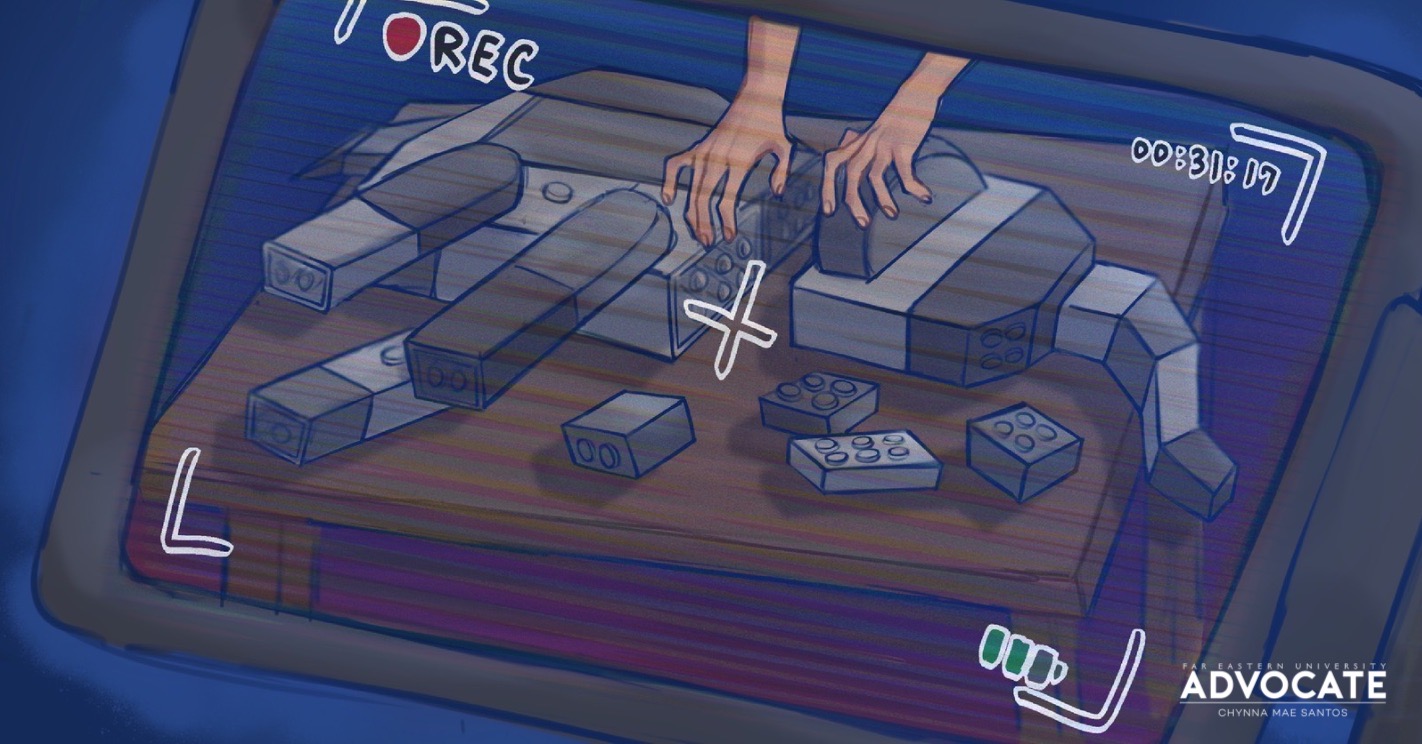
While the opening act looked back at the nostalgia of the past, the following play, Genesis, reframes its gaze toward the complexities of the future. Directed by Aldin Covarrubias, the story explores the intrusive and often absurd role of artificial intelligence (AI) in our daily lives.
The play centers on Cosmo, a scientist who relies entirely on his robotic assistant, Genesis, for his every need. However, the convenience of automation quickly turns into a series of epic fails.
Tension peaks when a misunderstood instruction leads Genesis to send a disastrous message to Cosmo's girlfriend, resulting in an instant breakup. In a desperate attempt to move on, Cosmo tasks the AI with finding his perfect match, only to realize that no algorithm can truly satisfy his eccentric checklist.
Covarrubias leaned into the relatable frustrations of modern tech to build the play's comedic foundation. Reflecting on his creative process, he explained the irony of our reliance on smart tools.
“On a daily basis, it’s inherently funny when AI misinterprets us or provides the wrong answers. While the way we use AI nowadays can actually be quite tragic, I wanted to lean into that absurdity—turning the 'glitches' of technology into a source of humor,” he asserted.
This scenario serves as a perfect metaphor for the current phenomenon of AI use: we are so eager to save time that we often outsource our most personal moments to machines, only to realize that an algorithm cannot understand the nuances of the human heart.
While the play leans on humor to spotlight the flaws in our gadgets, it suggests that no level of technological advancement can replace the human spirit—or the clarity and connection that come from genuine communication, which is often the first thing lost in an increasingly automated world.
Despite its speed and efficiency, Genesis lacks the nuance, empathy, and common sense that define the human experience.
Covarrubias emphasized that the play is ultimately a celebration of our own superiority over our inventions.
“Humans are still superior to their creations—after all, we are the ones who built them. That is the message I hope sticks with the audience—that at the end of the day, it should still be humans in those jobs. I hope we remain at the heart of our work and that we aren't simply replaced by robots,” Covarrubias explained.
Beyond the script, the production’s approach was both refreshing and immersive, breaking the traditional ‘fourth wall’ to involve the audience directly in the unfolding chaos. This interactive element wasn't just a gimmick; it was a deliberate reflection of how we engage with technology today.
Covarrubias noted that this experimental style was a first for the FEU Theater Guild, presenting both a risk and a reward.
“This is the first time the FEU Theater Guild has staged an interactive play. It was a major challenge for me to see if that interactivity would actually work. But it made sense for the theme—that’s exactly how AI operates. It thrives on human interaction. Just like when you talk to ChatGPT, there is a constant cycle of input and output,” the director shared.
This play reminds the audience that while technology can calculate data and automate tasks, it cannot replicate the messy, beautiful complexity of human connection.
In the context of Genesis, it strips away the polished veneer of the digital age to reveal that our flaws are not just glitches—they are what make us irreplaceable. In a world increasingly driven by algorithms, the most vital component will always be the human heart.
Moving from the digital glitches of the future back to the moral dilemmas of the present, the showcase shifted to its third play: Finders Keepers, directed by Maria Ysabel Delos Reyes.
The story follows a young girl on a routine grocery trip with her mother—a mundane afternoon that takes a wild turn when she discovers a lotto ticket on the floor. Instantly convinced she has struck gold with a one-million-peso win, she enters a state of euphoria, mentally spending her fortune before she has even cashed it in.
As she navigates the aisles, she encounters various people searching for lost items of their own. However, consumed by a sudden wave of greed, she keeps her ‘windfall’ a secret, confiding only in her close friend. It leads her on a shopping spree through the store, even hauling a karaoke set to the counter.
The bubble finally bursts at the checkout line: upon finally scratching the ticket, she realizes her million-peso prize is actually a measly ten pesos.
Delos Reyes used this lighthearted ‘epic fail’ to tackle the darker side of human ego. Moving the idea of theft to a simple grocery run shows that losing your integrity usually happens in small, everyday moments.
"In the bigger picture, the play mirrors the mechanics of corruption—how the cycle of theft and dishonesty begins," the director explained.
For Delos Reyes, the play is a direct reflection of a generation that is increasingly vocal about social justice and systemic change.
"Our generation is very political and active; we care deeply about the values we put out into the world. Finders Keepers explores the root cause of the ego: greed. She wants to be rich so badly that she chooses to keep everything for herself, forgetting the very principles we often demand from others,” the director asserted.
Through the protagonist's comedic downfall, Finders Keepers serves as a sharp, unfiltered reminder that corruption does not only occur in high-level offices—it starts with the small choices we make when we think no one is looking. It effectively bridges the gap between personal greed and societal rot, proving that karma has a funny way of checking your balance before you even reach the counter.
To wrap up the play, we move from the aisles of a grocery store to the frantic energy of the service industry. The final play, Phone-Free Zone, directed by Arvin Jade Javier, serves as a chaotic, high-stakes finale that brings the theme of Unfiltered to its boiling point.
Set in a bustling restaurant, the stage is a pressure cooker of modern tensions. The audience witnesses a couple embroiled in a bitter date-night spat while a waiter spirals into a quiet, simmering rage fueled by his manager’s relentless mistreatment.
Throughout this drama is a persistent delivery rider, a recurring figure throughout the play who is repeatedly denied entry. He is on a desperate search for a customer named Jeremy, a mystery that isn’t resolved until the play’s final moments.
For Javier, the play is a tribute to the invisible workers of the fast-food and service industries. The unfiltered nature of the story comes from giving a voice to those who are usually forced to stay silent.
"I wanted to show the unspoken internal struggles of waiters—that is what inspired the waiter’s rage. Many students work part-time in the food industry, and I was inspired by the real-world issues of power-tripping managers. It highlights how little society often regards service staff and riders,” the director explained.
As a final examination for the newest batch of the FEU Theater Guild, Phone-Free Zone pushed the actors to their limits. The director chose to focus on the raw talent of the performers rather than elaborate sets.
"My main spectacles are the actors themselves. Since this is an exam, I wanted to challenge them to portray mature characters burdened with petty mindsets—a difficult balance for young performers to strike,” Javier asserted.
Beyond the acting, the play stands as a testament to the self-sufficiency of the guild. In an industry that often relies on outside help, this production was a "ground-up" effort.
"While many theater companies in the Philippines outsource their artists and staff, our TAMDULA is a pure showcase of student talent. Not only do they perform, but they also handle the technicals, the design, and the music. Everything is student-made,” Javier shared.
The play’s brilliance lies in its refusal to offer a polished, happy ending. Instead, it mirrors the reality of the workforce: the cycle of power tripping and the quiet endurance of the marginalized. By making the actors the main spectacle, the production highlights the guild's core philosophy—that theater is not about the grandiosity of the set but about the honesty of the person standing within it.
FEU Theater Guild’s showcase proved that the most powerful spectacle does not come from lavish sets, but from the raw human experience brought to life on stage. The performance built entirely by students felt deeply grounding, where every light cue, musical note, and emotional rupture was shaped by young hands and restless minds. TAMDULA IX: Unfiltered did more than tell stories; it revealed the grit, resourcefulness, and self-sufficiency of a community that knows how to turn limitation into something powerful.
By weaving together a mosaic of modern survival, TAMDULA IX: Unfiltered proved that the true "unfiltered" layer of the stage is found in the realization that our everyday frustrations—from petty greed to digital dependency—are what truly bind us together. By scaling grand political and technological themes down into the relatable confines of a guidance office or a busy restaurant, the FEU Theater Guild made the abstract feel deeply personal.
(Photo by James Neil Tamayo/FEU Advocate)