Words are Futile Devices
- February 27, 2026 09:58
FEU Advocate
February 07, 2026 14:18
By Julienne G. Tan
Love rarely enters students’ lives as something entirely new. Before it is lived, it is learned through screens, soundtracks, and stories that offer emotional direction that real life often withholds. Over time, these stories begin to shape how students understand love itself—what it should feel like, how it should unfold, and where its limits lie.
For students navigating dating, friendship, and identity simultaneously, these portrayals offer clarity and reassurance. When emotions on screen feel easier to follow than the ones unfolding off it, the question is not why students return to these stories, but what they begin to take with them.
Love in many forms
Romantic media has become a constant source of entertainment for many. Across shows, films, and songs, romance is framed as an emotional backbone, something powerful enough to justify risk and transformation.
These types of media are often one of the students’ first examples of love, shaping their expectations of intimacy by presenting romance in a curated and idealized form—one that can comfort, but also distort how real relationships are approached.
For Gen Z students, romance has become a steady presence, consumed repeatedly through binge-watching, with the community of the genre being kept alive through each new portrayal.
As a result, the media does not simply reflect romance; it also helps define what feels recognizable, desirable, and worth pursuing. But within this landscape of heightened emotion, some students find themselves drawn not to spectacle but to restraint.
In an interview with FEU Advocate, Sharpei Torres, a first-year nursing student, shared that she finds herself drawn to stories where love is understated rather than dramatic. She highlighted ‘The Hunger Games’ franchise and its portrayal of Katniss Everdeen and Peeta Mellark’s relationship as one that impacted her the most.
“What made it stick was how their love wasn’t flashy or perfect; it was quiet, built on survival, loyalty, and small moments of care. In a world full of chaos and violence, their connection felt like something real and grounding, which made it emotionally powerful,” Torres shared.
The main character of the movie, Katniss, and her difficulty in expressing her feelings resonated deeply with her, reflecting how love does not always show up in words. Over time, stories like this become sentimental references that students like Torres subconsciously return to when trying to understand their feelings.
On the other hand, freshman nursing student Kirsten Monis shared that she is more drawn to love stories that center on choice and self-understanding rather than grand sacrifices, such as ‘Billie and Emma’ (2018), directed by Samantha Lee, which stayed with her for its portrayal of queer love within a conservative setting.
“What makes the movie even more moving for me is that, in the end, Emma chose herself. She chose to live without the burden of the what-could-have-beens that would come from choosing a life she was not ready for, while still keeping the relationship she had with Billie,” she expressed.
With countless portrayals of love circulating across screens and soundtracks, no single story defines romance. Taken together, however, these narratives create a shared emotional language. Over time, they influence what feels familiar, appealing, or emotionally convincing, shaping expectations of love in ways that often go unnoticed.
Because romance is woven so tightly into everyday media, many audiences absorb ideas of connection through stories that feel similar and accessible, often before encountering the slower, messier realities of forming relationships in real life.
In the Philippines, romance is not just a genre—it is a foundational part of entertainment, from mainstream rom-coms and love-team pairings to viral soundtracks and streaming hits.
Love teams and kilig-driven pairings, a century-old staple of Filipino cinema and pop culture, have helped solidify romantic narratives as comfort food for viewers, reinforcing the idea that love should be dramatic, emotionally expressive, and inevitable.
Across films, series, and music, intimacy is portrayed as constant, expressive, and grand. Love songs echo the same promise, compressing longing, devotion, and heartbreak into a few carefully written minutes. While these portrayals are not universal, their repetition gives them cultural weight, making heightened emotion feel established and persuasive.
However, this influence is not always benign. As expectations take shape through repeated exposure, the distance between narrative love and lived relationships can become difficult to navigate.
Monis shared that comparing real-life relationships to those portrayed in the media often creates pressure rather than clarity. While movies and series offer lessons about communication and care, she noted that applying those ideas in real situations can feel paralyzing.
“It’s not entirely far from reality, but there is still a clear gap between how love is shown and how it actually plays out in real relationships,” the nursing student explained.
She pointed out how media portrayals can make love feel structured and instinctive, giving the impression that the right words or actions should come naturally. In reality, relationships require effort, timing, and emotional risk—elements that cannot be rehearsed or guaranteed.
“Setting my expectations of relationships based on how they look in movies is unhealthy because, at the end of the day, those characters are fictional. The people we build relationships with are real human beings, each carrying their own emotions, struggles, and uniqueness,” Monis admitted.
Over time, this pattern influences how students interpret effort, availability, and connection. Ordinary pauses, misalignments, or emotional distance in real relationships can begin to feel like absence, not variation, measured against a standard shaped less by lived experience than by narrative design and ingrained cultural expectations.
At the same time, love in media is no longer experienced in isolation. Online spaces, such as fandoms, social media forums, group chats, and comment sections, turn private viewing into shared emotional participation, where meaning is built collectively rather than individually.
This is evident in the reception of ‘Heated Rivalry’ (2025), a Canadian series that became a breakout queer romance hit shortly after its premiere. By placing a queer love story at the center of a traditionally masculine sport, the show resonated widely, particularly within the LGBTQIA+ community. Its slow-burn tension, charged dialogue, and emphasis on longing and vulnerability offered a portrayal of connection that felt both rare and emotionally precise.
Viewers did not simply follow the relationship; they lingered on it. Scenes were replayed, lines dissected, and moments of tension transformed into communal reference points.
Yet this shared intensity also highlights a contradiction. While stories like Heated Rivalry revolve around patience, emotional honesty, and sustained vulnerability, many students navigate lives marked by limited time, instability, and emotional fatigue. The longing on screen unfolds slowly and deliberately, while real life often demands efficiency and restraint.
“It made me realize that love will always be messy, but easy. It is not something that follows a fixed structure or a definite storyline; rather, it is a love that continuously shapes itself for two people, while they also grow and shape themselves together,” Monis explained.
For young adults navigating uncertainty, the appeal is understandable. Romantic media offers predictability where routines feel unstable, emotional clarity where feelings are ambiguous, and connection without immediate risk. But as these narratives grow louder and more communal, they continue to influence how intimacy, effort, and love itself are judged—long after the screen fades to black.
Watching, waiting, wanting
For many Gen Zs, the pull of romantic media lies in the freedom it offers. Movies and series create a space where love can be imagined, reshaped, and explored without immediate consequence—a space to sit with emotions that may feel premature, complicated, or out of reach in real life.
“I also believe that these portrayals appeal so much because our generation is allowed to imagine, shape, and explore our own ideas of love. It’s like an escape to the kind of love we have experienced or are yet to experience in real life,” Monis shared.
However, hesitation still gets ahead of many students, shaped by financial pressure, academic survival, and the awareness that love alone does not guarantee security, slowly changing how romance is valued.
With this, the line between story and reality grows more intriguing. These portrayals do not merely reflect what students already feel; they also actively shape how intimacy is imagined by repeatedly presenting love as emotionally intense and narratively clear.
“I think love portrayed in movies and series will always be somewhere in between reality and fiction because, no matter what is shown, we will always find bits of ourselves that we can relate to,” the nursing student added.
Media offers a version of intensity, clarity, and grand gestures—but life rarely delivers in picture-perfect segments. The question is not just whether students take lessons from on-screen romance, but whether they mistake these dramatized emotions for the whole of real connection.
Love in media becomes both a refuge and a reference point. It offers emotional clarity when real relationships feel uncertain, but it also teaches students to expect intensity and certainty that everyday intimacy rarely provides. Learning to love, then, requires understanding that true intimacy is not scripted and does not always arrive with music or resolution.
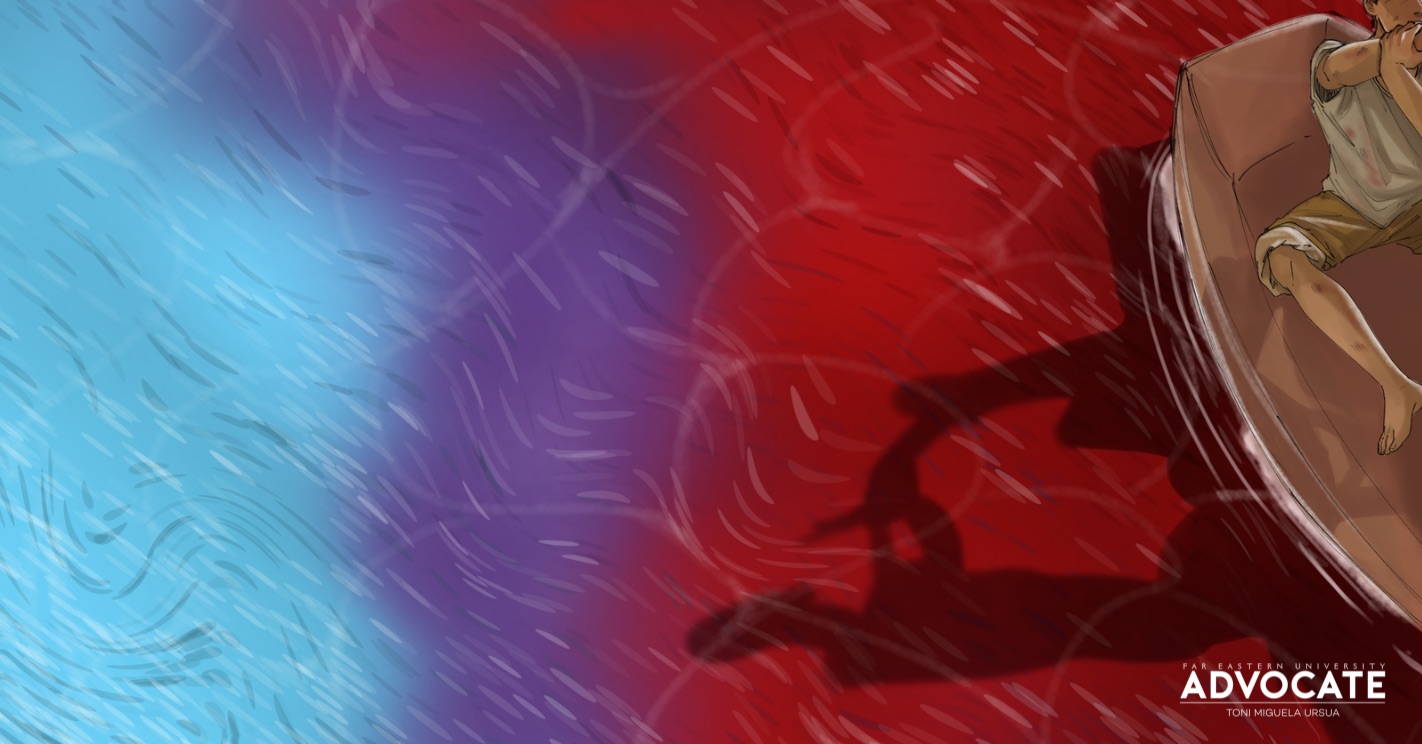
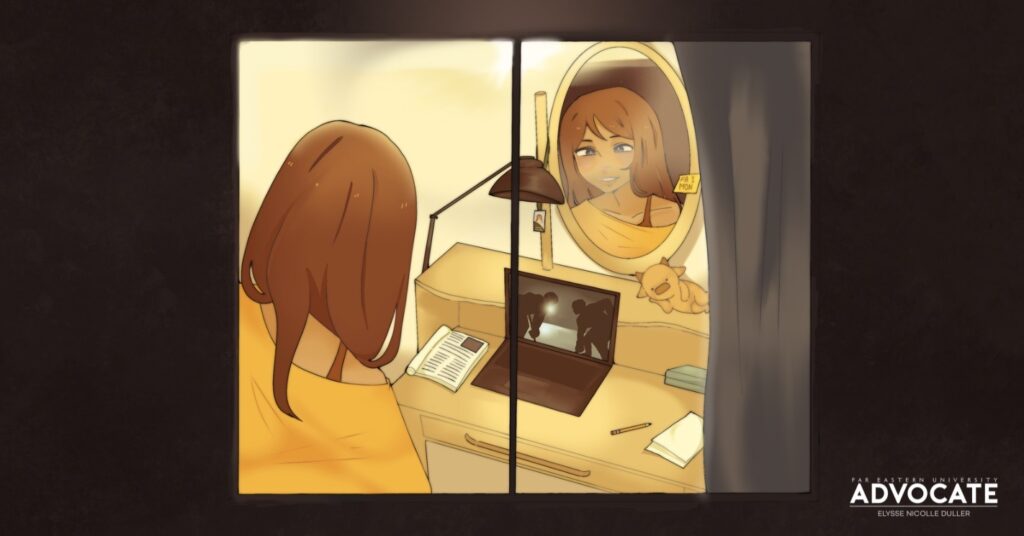
(Illustration by Elysse Nicole Duller/ FEU Advocate)