Lady Tams’ midway run falters vs Fighting Maroons
- September 22, 2024 15:10
FEU Advocate
March 12, 2026 17:46
By Shayne Elizabeth T. Flores
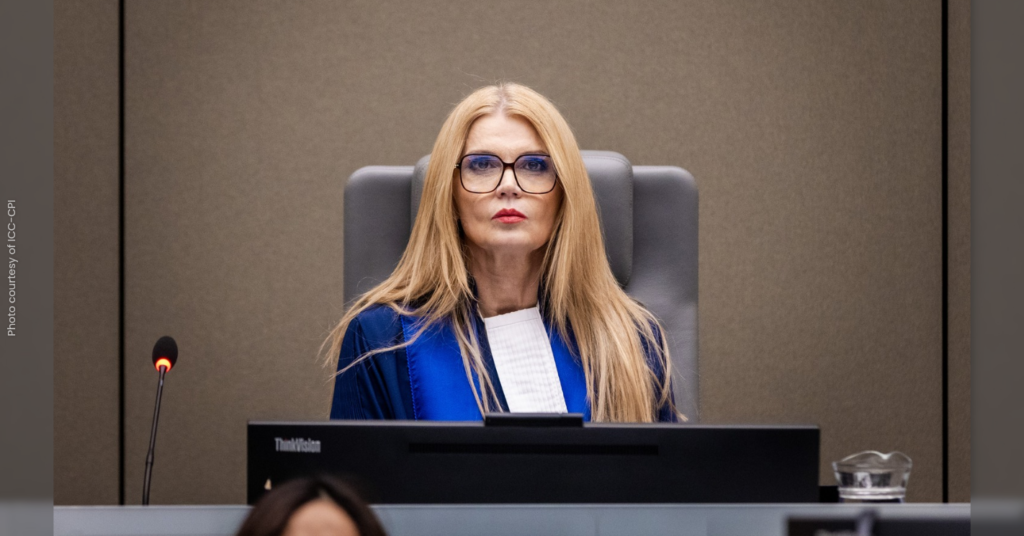
Marking a development from its postponement last year, the International Criminal Court (ICC) concluded the confirmation of charges hearing against former president Rodrigo Roa Duterte, with the written decision expected to be delivered within 60 days.
The hearing was initially scheduled on September 23, 2025, but it was postponed by the Pre-Trial Chamber I in response to Duterte’s lawyers contending that the former president was unfit to take part in the proceedings due to “cognitive impairment in multiple domains.”
Last January, however, Pre-Trial Chamber I found the former president fit to take part in the pre-trial proceedings and scheduled the commencement of the confirmation of charges hearing for February 23.
The confirmation of charges lasted four days, which officially closed last February 27.
It tackled the oral submissions of the Prosecutor, the Common Legal Representatives of the Victims (CLRV), and the Defence, along with their respective closing statements.
Charges against Duterte
Serving as the country’s president from 2016 to 2022, Duterte’s term was marked by his ‘war on drugs’ campaign that has led to the deaths of over 12,000 Filipinos due to extrajudicial killings (EJK).
Following a request of the ICC Office of the Prosecutor and the issuance of a warrant of arrest, Duterte was surrendered to the ICC upon being suspected of crimes against humanity of murder and attempted murder in the context of the anti-drug war.
Per Human Rights Watch’s outline of the ICC’s “Document Containing the Charges,” the ICC Office of the Prosecutor specifically sought the confirmation of three counts of murder against Duterte based on the following:
The Office of the Prosecutor clarified that these specific incidents, as well as the 78 victims cited in the document, are non-exhaustive lists. Thus, they may seek to present evidence of additional incidents and victims if the charges against Duterte would be confirmed.
Duterte is alleged to be criminally responsible for these crimes in various ways, such as through indirectly committing them with others through the control he exercised over Philippine law enforcement agencies and the so-called ‘Davao Death Squad’ in executing EJK.
Along with Duterte, the prosecution of the ICC has also named his indirect co-perpetrators in the crimes against humanity case.
This includes Senators Ronald ‘Bato’ dela Rosa and Bong Go, along with former police chiefs Vicente Danao, Oscar Albayalde, and the late Camilo Cascolan. Additionally, former National Bureau of Investigation chief Dante Gierran, former Philippine Drug Enforcement Agency chief Isidro Lapeña, former Justice secretary Vitaliano Aguirre II were also listed.
According to Ross Tugade, an ICC-accredited assistant to counsel, it is likely that warrants of arrest would be issued against these eight co-preparators soon.
Duterte’s absence, defense
Meanwhile, despite being ruled fit to attend pre-trial hearings, Duterte remained absent throughout the confirmation of charges.
In a letter submitted to the ICC last February 18, the former president made a last-minute request to skip the confirmation of charges hearings, claiming that he is “old, tired, and frail.” He also asked the Court to respect his ‘peace’ inside his cell.
Upon submitting his waiver, the ICC judges allowed Duterte’s absence, claiming that it was a sufficient basis to be excused under the rules.
Nonetheless, they called Duterte’s reasons as ‘speculative,’ ‘irrelevant,’ and “have no impact on court proceedings.”
Represented by his lead defense counsel Nicholas Kaufman, Duterte’s camp argued that there is no direct correlation between “stuff that came out of Rodrigo Duterte’s mouth and the deaths pertinent to the case.”
Kaufman claimed that Duterte did not give any direct order to kill the victims of the war on drugs, regarding the speeches and public statements cited by the prosecution as ‘hyperbole’ and ‘bluster.’
Per the defense counsel, the prosecution’s failure to prove a direct connection between Duterte’s statement and the EJK cases is enough to prove the former president’s innocence.
In his closing statement, Kaufman reiterated that Duterte is not guilty, defending that the former president’s only fault is his choice of language.
“I beg you not to confirm any of the charges. I ask you to let Rodrigo Duterte return to the Philippines, not to govern. But simply to let him live out the rest of his days in peace, in his humble dwelling in Davao,” he appealed.
Prosecution’s side
On the other hand, the prosecution asserted Duterte’s role in the EJK as indirect co-perpetrator.
“First, he agreed to a common plan to neutralize alleged criminals. Second, he and his fellow co-perpetrators jointly controlled a structure of power, namely the Davao Death Squad and the National Network, which they used to pursue the common plan. Third, Mr. Duterte made an essential contribution to the crimes within the framework of the common plan. And fourth, he did this with the requisite intent,” said trial lawyer Robyn Croft.
Highlighting that Duterte’s “criminal plan and his intent were no secret,” Deputy ICC prosecutor Mame Mandiaye Niang quoted several of Duterte’s public speeches and interviews, where he outright encouraged EJK.
Though still unidentified, more details on the prosecution’s insider witnesses were also disclosed including their knowledge of the internal operation of the Philippine National Police’s Oplan Tokhang, as confirmed by trial lawyer Edward Jeremy.
One insider witness’s testimony revealed that Oplan Tokhang targets “had to be poor – those who do not have the means to file a complaint or to complain.”
Additionally, the prosecution obtained an excel sheet of Duterte’s so-called ‘narco list,’ where names of the former president’s targets were allegedly listed and marked ‘neutralized’ once killed. Per one of the insider witnesses, the word ‘neutralize’ was used to emphasize Duterte’s kill order.
Victims’ narratives
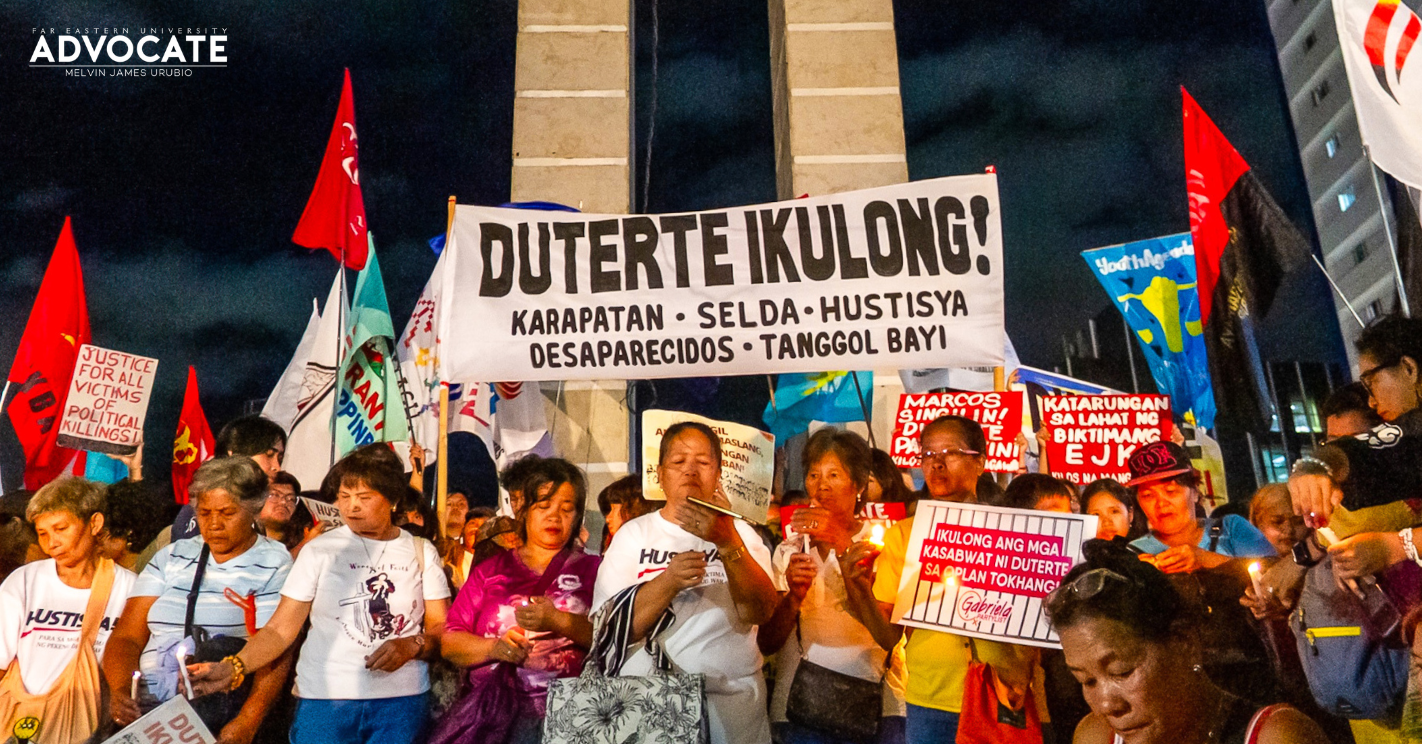
On top of the evidence, stories of drug war victims framed as ‘nanlaban’ were also put forward by the CLRV amid the hearing.
The CLRV noted the pattern of the ‘nanlaban’ narrative within marginalized communities, which refers to policemen’s justification for killing drug suspects because they had supposedly fought back in an encounter.
According to the CLRV, this pattern of killing and its concentration on poor victims made it difficult to file complaints in the domestic justice system.
“As the evidence on the record unequivocally shows, individuals targeted by Mr. Duterte’s anti-drug operations overwhelmingly came from impoverished communities where social mobility is limited and opportunities are scarce,” CLRV lead counsel Paolina Massidda said.
Massidda further contextualized the drug problem in the country, underlining that turning to methamphetamine or shabu becomes a ‘coping mechanism’ for poor Filipinos amid difficult living conditions. As such, she claimed that Duterte’s anti-drug campaign disproportionately targets the poor.
Moreover, Filipino lawyer Gilbert Andres explained how the war on drugs put Filipino communities under dehumanizing and traumatizing conditions as most victims were killed in front of their families and within their homes and neighborhoods.
“Mr. Duterte’s drug war campaign targeted the very humanity of the victims, of their families, and of their communities. In Filipino, the indirect victims expressed this in one sentence: ‘Inalisan kami ng dangal (We were stripped of our dignity),’” he said.
In the CLRV’s closing statement, Andres emphasized the significance of the confirmation of charges to the victims, especially in relation to their communities and the Filipino nation as a whole.
“The victims want these charges to be confirmed because they want to be reintegrated to their communities because they are still in the shadows of fake news of fear and of threats from Mr. Duterte’s supporters… Hence it is important that all these charges be confirmed so that the victims will be taken out of the shadow of darkness [and] into the light of truth and justice,” he remarked.
Drug war victims and kin were also present at The Hague to personally witness the hearing.
Denying the allegations that the victims used taxpayers’ money or were funded by communist rebels, ICC Assistant to Counsel Kristina Conti clarified that non-government organizations and private individuals helped in funding the victims’ week-long trip in the Netherlands.
Upon the hearing’s conclusion, the Pre-Trial Chamber will now deliberate on the sufficiency of the evidence at hand.
Set to deliver their written decision within 60 days, the judges may either confirm the charges against Duterte and commit him to stand on trial before a Trial Chamber or decline to confirm the charges and stop the proceedings.
Additionally, they may also adjourn the hearing and request the Prosecutor to submit further evidence, to conduct further investigation, or to amend any charge.
(Photo courtesy of ICC-CPI)